Yoga Poses For Flexibility Beginners: A Gentle Starting Point
By:Author:Flexi Yoga Editorial
Updated on:October 28, 2026
- Do Beginner Yoga Poses Actually Loosen Tight Muscles?
- How Beginner Stretch Poses Change Tight Areas
- How Often Beginners Should Hold These Poses
- Short Gentle Sessions Versus One Intense Class
- Making Beginner Flexibility Practice Fit a Busy Week
- The Myth That One Pose Fixes One Tight Spot
- What Actually Changes How Flexible Beginners Get
- Where Beginner Stretching Routines Go Wrong
- Starting Beginner Flexibility Poses With Flexi Yoga
- Keeping Beginner Flexibility Goals Realistic
Yoga poses for flexibility beginners work by holding a muscle at a comfortable edge of its range, often enough that the body stops guarding against the stretch and allows it a little deeper.
That's the whole mechanism - repeated, gentle exposure, not force. Muscles and connective tissue respond to consistent, low-intensity stretching far better than to one hard push.
This guide covers which beginner poses actually help, how often to practise them, the arithmetic behind why short sessions win, and the mistakes that quietly stall progress.
Do Beginner Yoga Poses Actually Loosen Tight Muscles?
Yes, within limits - holding a stretch allows the nervous system to dial down its protective tension, and the muscle fibres settle into a longer resting length over repeated sessions.
Nothing changes in one go. A single ten-minute session won't rewrite years of tight hamstrings, but the body adapts in small increments every time it's asked to stretch in a controlled way.
Here's the honest arithmetic: if someone practises four short sessions a week instead of one, that's roughly four times the number of adaptation signals sent to the same muscles over the same month.
More frequent, gentle exposure beats rare, intense exposure - not because the intense version is wrong, but because consistency compounds and soreness doesn't.
How Beginner Stretch Poses Change Tight Areas
Two things happen at once when a beginner holds a basic pose - the nervous system relaxes its guard, and the tissue itself slowly lengthens.
The Nervous System Lets Go First
Before any tissue actually lengthens, the body has to stop treating the stretch as a threat, which is why the first few breaths in a pose often feel like the tightest part.
The Tissue Adapts Second
Once the nervous system eases off, the muscle and surrounding connective tissue can settle into the new position, and repeating that over weeks is what gradually extends the usable range.
Both stages need repetition, not intensity, which is exactly why beginner-friendly poses held for 20-30 seconds work better than a single deep, forced stretch.
How Often Beginners Should Hold These Poses
A good starting point is short daily or near-daily sessions rather than one long weekly block, since the body responds to frequency more than duration.
A Simple Weekly Starting Structure
Five to ten minutes most days is enough to begin noticing an easier range of motion in common tight spots like hamstrings, hips and shoulders.
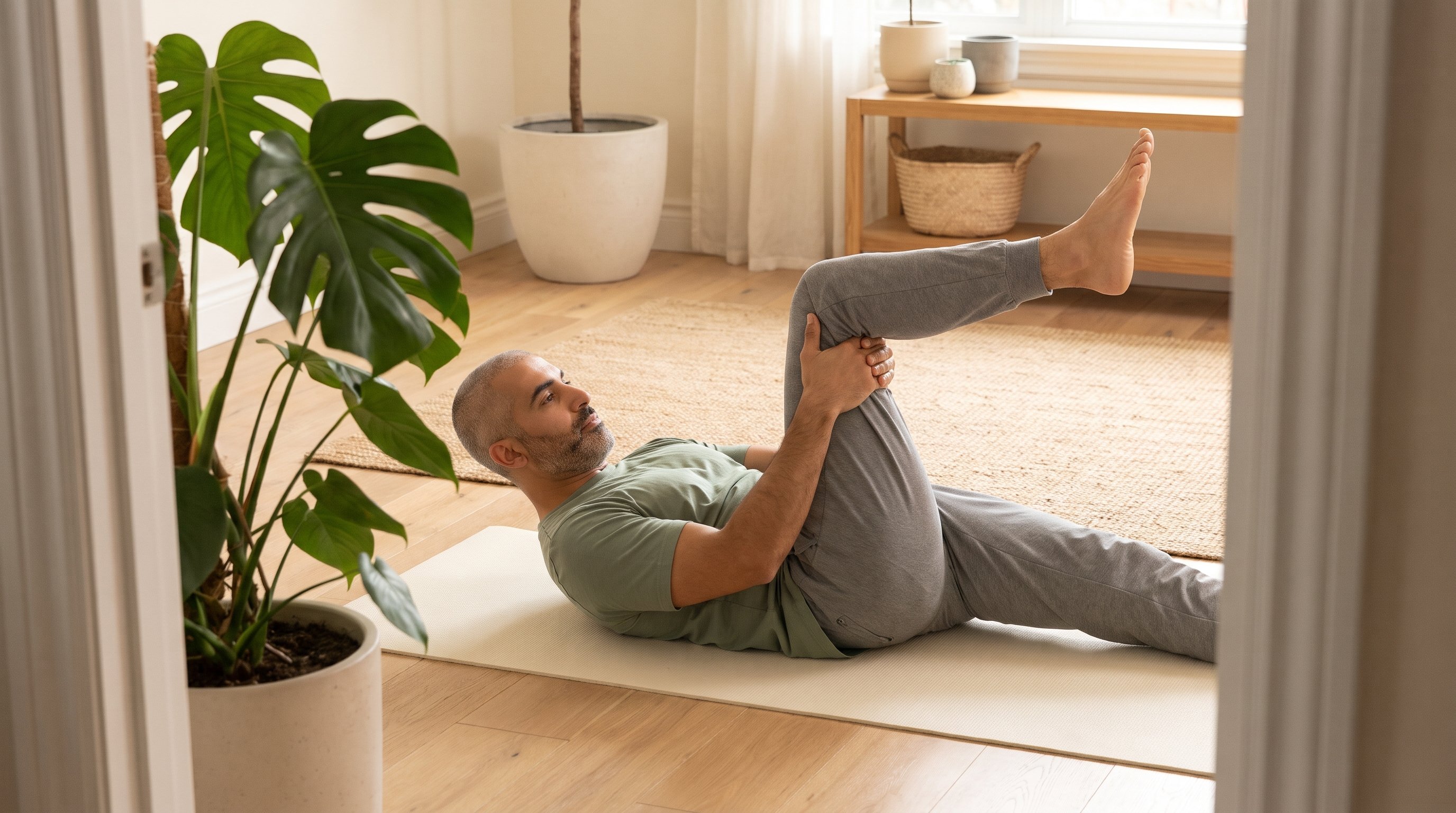
| Pose | Area Targeted | Suggested Hold |
|---|---|---|
| Child's Pose | Lower back, hips | 30-45 seconds |
| Seated Forward Fold | Hamstrings | 20-30 seconds |
| Cat-Cow | Spine, neck | 5-8 slow rounds |
| Low Lunge | Hip flexors | 20-30 seconds per side |
| Reclined Figure Four | Hips, glutes | 30 seconds per side |
That full table takes under ten minutes to move through, which makes it realistic to repeat most days of the week without it feeling like a chore.
Short Gentle Sessions Versus One Intense Class
Picture two options - ten minutes of gentle beginner poses most days, or one 90-minute intense yoga class once a week.
The intense class sounds more productive, but it asks a lot of a body that isn't used to deep stretching, and soreness or discouragement often means the next session gets skipped entirely.
The short daily version sends the same adaptation signal far more often across a month - and a signal sent repeatedly beats one sent once, no matter how deep that one session goes.
Adherence is the deciding factor here, not how hard any single session feels.
Making Beginner Flexibility Practice Fit a Busy Week
Mornings, a lunch break, or the ten minutes before bed all work fine for beginner poses - the point is finding a slot that repeats easily, not a perfect one.
Stacking the habit onto something already fixed, like right after brushing teeth, removes the need to remember or decide anew each day.
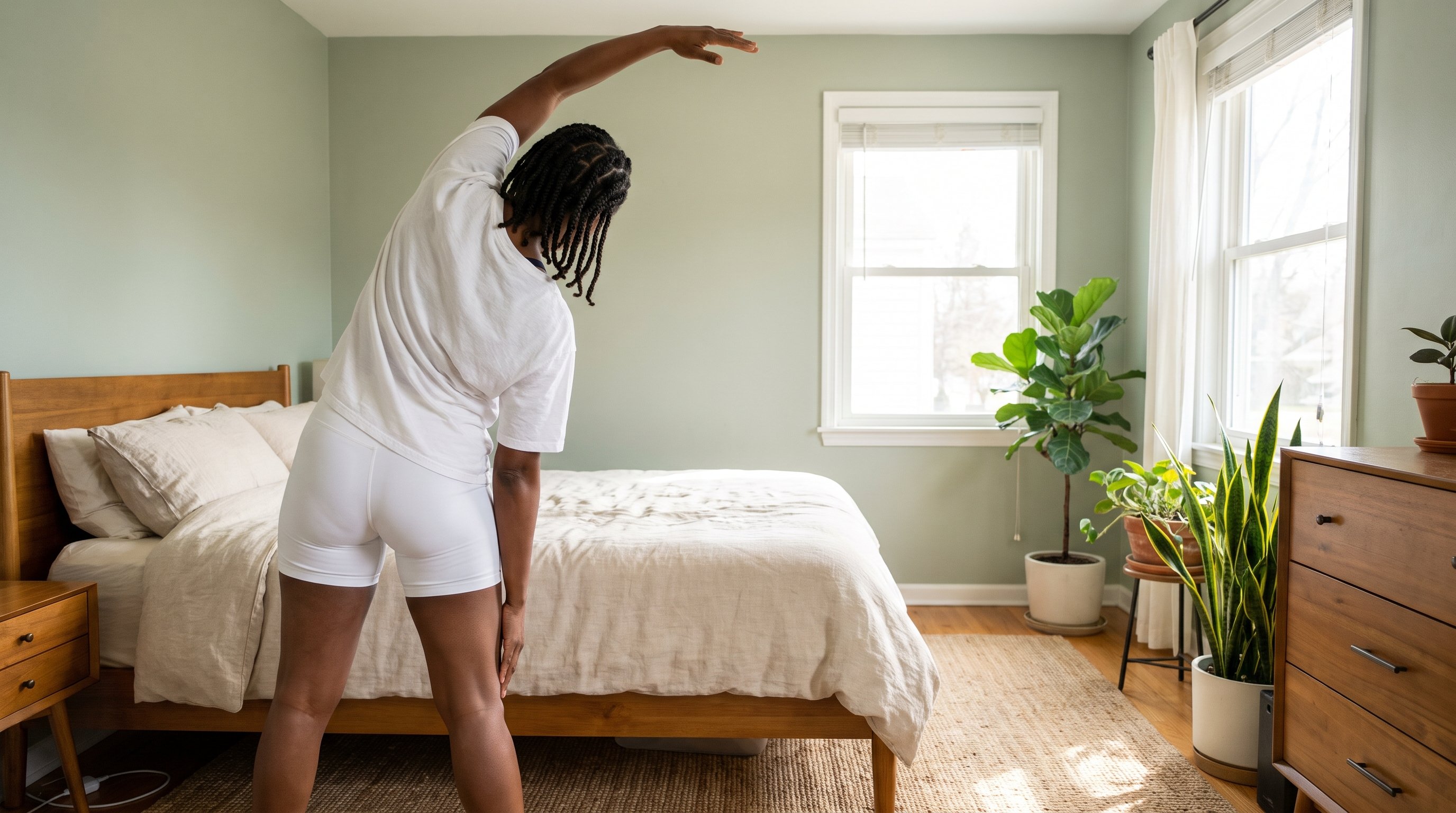
This is where a guided structure helps - guided flexibility routines built for beginners offer short sessions, so there's no guesswork about which pose comes next or how long to hold it.
Having the sequence laid out removes one more decision from an already busy day, which is often the difference between a session happening and it slipping to tomorrow.
The Myth That One Pose Fixes One Tight Spot
A common hope is that a specific pose will loosen one exact stubborn area - a single stretch for tight hips, say, that fixes only the hips and nothing else.
That's not how the body works. Flexibility gains from stretching spread across the muscle groups and joints involved in a movement, not into one isolated pocket, no matter how precisely a pose is marketed.
The real answer is broader and less exciting - consistent practice across several poses that cover the major tight areas (hips, hamstrings, shoulders, spine) tends to improve overall ease of movement over time.
There's no shortcut pose and no overnight fix - just repeated, gentle sessions that gradually add up.
What Actually Changes How Flexible Beginners Get
Three factors matter more than anything else when a beginner is trying to get more flexible.
The Factors That Move the Needle
- How often you practise - four short sessions a week outweigh one long one, because the body adapts between sessions, not during them.
- How gentle the stretch is - staying at a comfortable edge rather than forcing depth keeps the nervous system relaxed and willing to let go further next time.
- How long you keep it up - weeks and months of light, regular practice matter more than any single week of effort.
None of these factors demand more time per day - they just ask for more days.
Where Beginner Stretching Routines Go Wrong
Forcing the Stretch Too Deep, Too Soon
Pushing past a comfortable edge tightens the muscle defensively instead of releasing it, so the fix is to ease off until the stretch feels mild, not maximal.
Stretching Once and Expecting Lasting Change
One session cannot undo years of tightness, so spacing shorter sessions across most days of the week gives the body far more chances to adapt.
Holding the Breath Through the Pose
Tense breathing keeps the nervous system on alert, so slow, steady breathing throughout each hold helps the muscle actually let go.
Skipping the Easy Days When Motivation Dips
A missed week undoes more progress than a single hard session builds, so a short five-minute version on low-motivation days keeps the habit alive.
Comparing Range of Motion to Someone Else's
Starting flexibility varies hugely between people, so the only useful comparison is to that same person's own range a few weeks earlier.
Starting Beginner Flexibility Poses With Flexi Yoga
Knowing which poses to do is only half the challenge - the harder part is remembering to show up and sticking with it past the first fortnight.
Flexi Yoga builds a tailored flexibility plan around short, guided sessions, so beginners get a clear sequence of poses instead of having to work it out alone.
The app also includes daily habit trackers and lifestyle challenges, which make it easier to see the small, steady wins that come from showing up most days rather than occasionally.
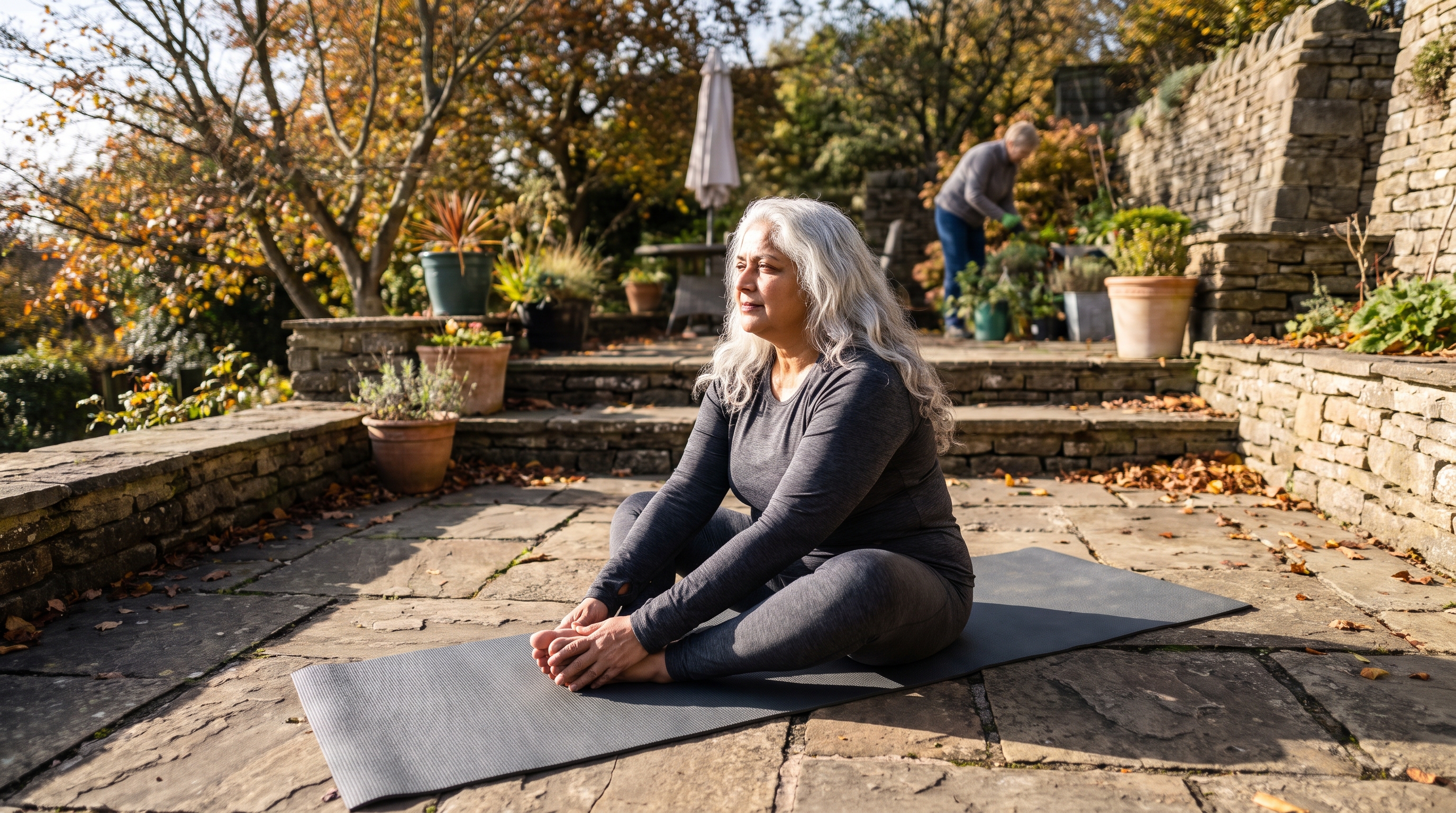
Move Freely Again
Loosen Up Every Day
Keeping Beginner Flexibility Goals Realistic
The best move right now is choosing three or four poses from the table above and holding them most days this week - nothing more complicated than that.
A guided app can take that first step further by laying out a structured plan so the only decision left each day is simply starting.
FAQ
There's no fixed timeline, since starting flexibility and how often someone practises both vary - the honest answer is to expect gradual, uneven progress rather than a set date.
Mild stiffness or a slight shake while holding a pose is common when muscles aren't used to being stretched, but sharp or lasting pain means the pose needs easing back.
A two or three minute version covering just one or two poses still sends the body a useful signal, and Flexi Yoga's shorter guided sessions are built for exactly that situation.
Early gains often come from the nervous system easing off quickly, while deeper tissue change takes longer, so a plateau around week two or three is normal rather than a sign of failure.
Share this post