Gentle Yoga for Seniors: A Low-Risk Way to Stay Mobile
By:Author:Flexi Yoga Editorial
Updated on:October 28, 2026
- A Simple Weekly Layout Worth Copying
- How Often Gentle Sessions Should Happen
- Why Short Gentle Sessions Beat a Long Weekly Class
- Fitting Gentle Practice Into an Ordinary Day
- Adjusting Gentle Yoga to Different Situations
- What to Expect and Where Momentum Often Drops
- Building Gentle Yoga for Seniors Into a Daily Habit
- Making Gentle Movement a Lasting Part of the Week
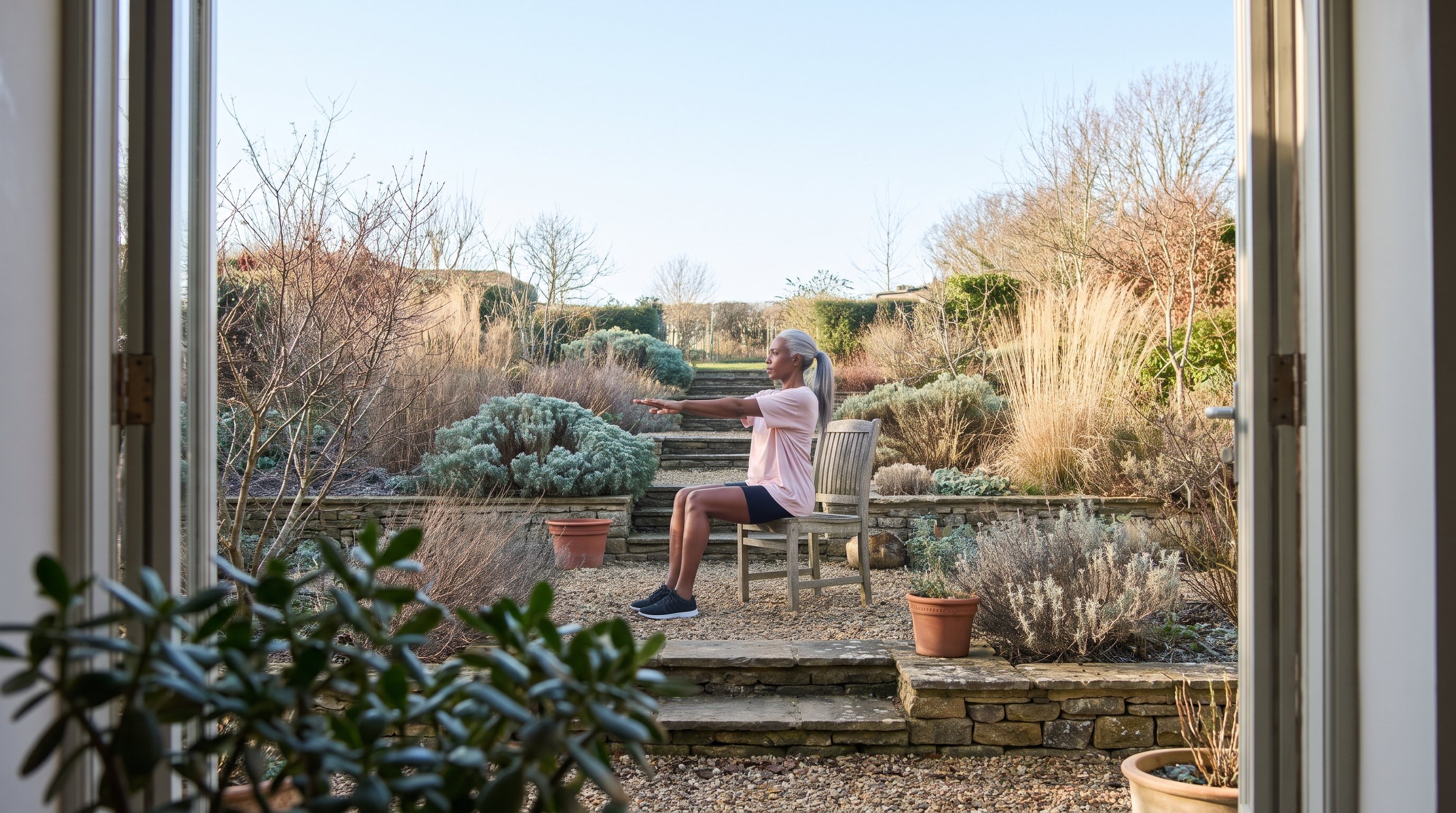
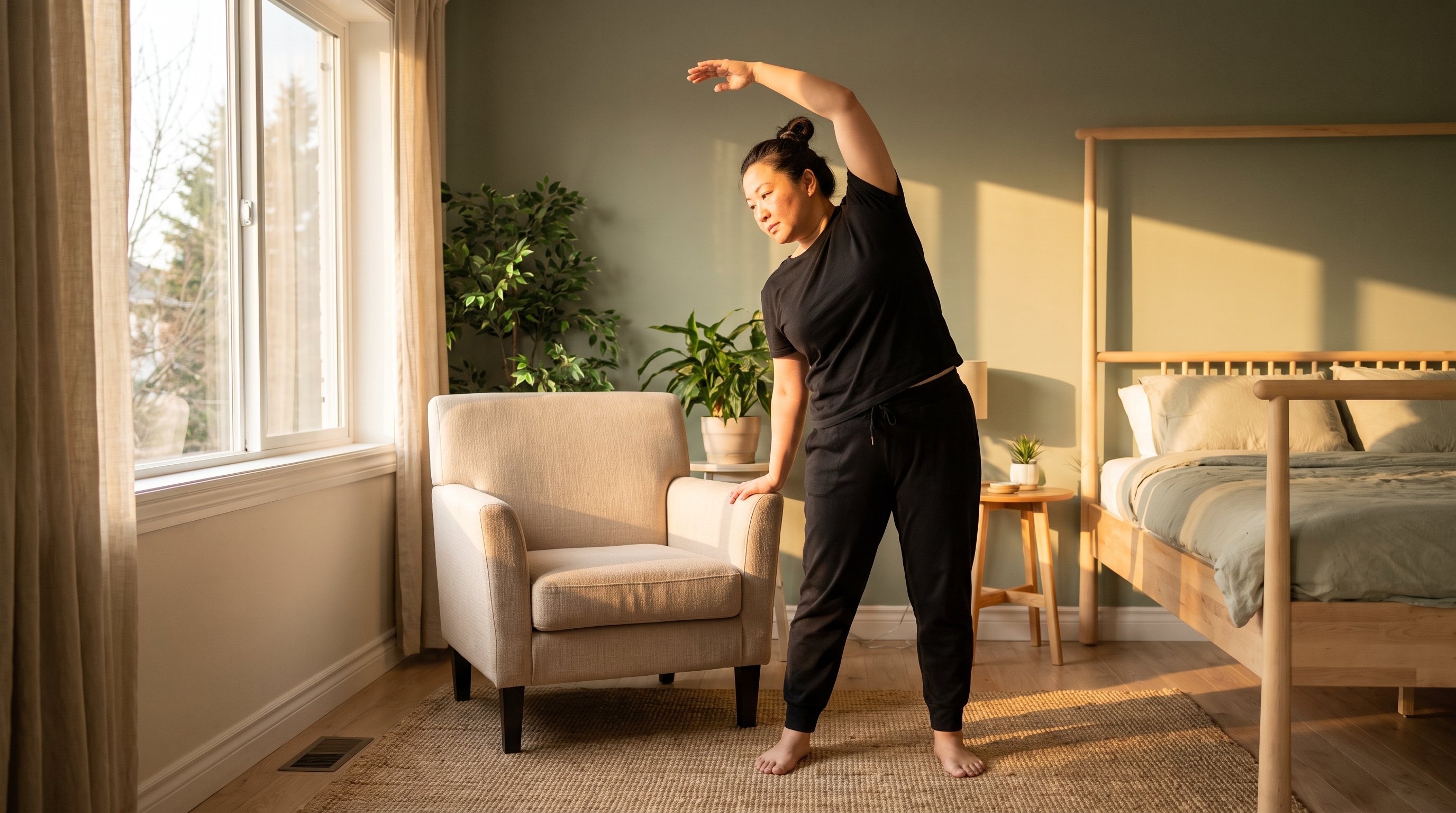
Gentle yoga for seniors means short, slow sessions built around breathing, balance and easy range of motion, not deep stretches or difficult poses. It can be done standing, seated, or using a chair for support, and most sessions run well under half an hour.
The idea is simple. Joints move better when they move often, so gentle, repeated motion through a comfortable range tends to keep things working more smoothly than sitting still ever does.
This article covers what a typical week looks like, how much practice is reasonable, why easier sessions tend to stick better than harder ones, and how to adapt the approach to fit different situations and routines.
A Simple Weekly Layout Worth Copying
A workable week does not need variety for variety's sake. Repeating a small set of movements gives the body a chance to get familiar with them, which tends to make each session feel easier over time.
A Sample Week
- Monday - seated neck and shoulder rolls, gentle seated twists, ankle circles
- Tuesday - standing or chair-assisted balance holds, slow arm raises
- Wednesday - rest or a short walk, no formal session
- Thursday - seated forward reach, gentle hip circles, deep breathing
- Friday - standing calf raises, wall-supported stretches, slow neck turns
- Saturday - a repeat of Monday's routine, done at a slightly slower pace
- Sunday - rest, or a gentle walk if the day allows
How Often Gentle Sessions Should Happen
There is no single number that fits everyone, but a pattern of short, frequent sessions tends to work better than one long session a week.
A Quantity Guide to Apply Today
The table below gives a starting point. Adjust the length or frequency based on how the body feels on a given day.
| Goal | Frequency | Session Length |
|---|---|---|
| General mobility | 4 to 5 times a week | 10 to 15 minutes |
| Balance work | 3 times a week | 5 to 10 minutes |
| Gentle stretching | Daily | 5 to 10 minutes |
| Recovery days | 2 to 3 times a week | A short walk instead |
Why Short Gentle Sessions Beat a Long Weekly Class
Picture two routes to the same destination. One is a single, demanding hour-long class booked once a week at a studio across town.
The other is ten minutes of gentle seated and standing movement, done most days, at home.
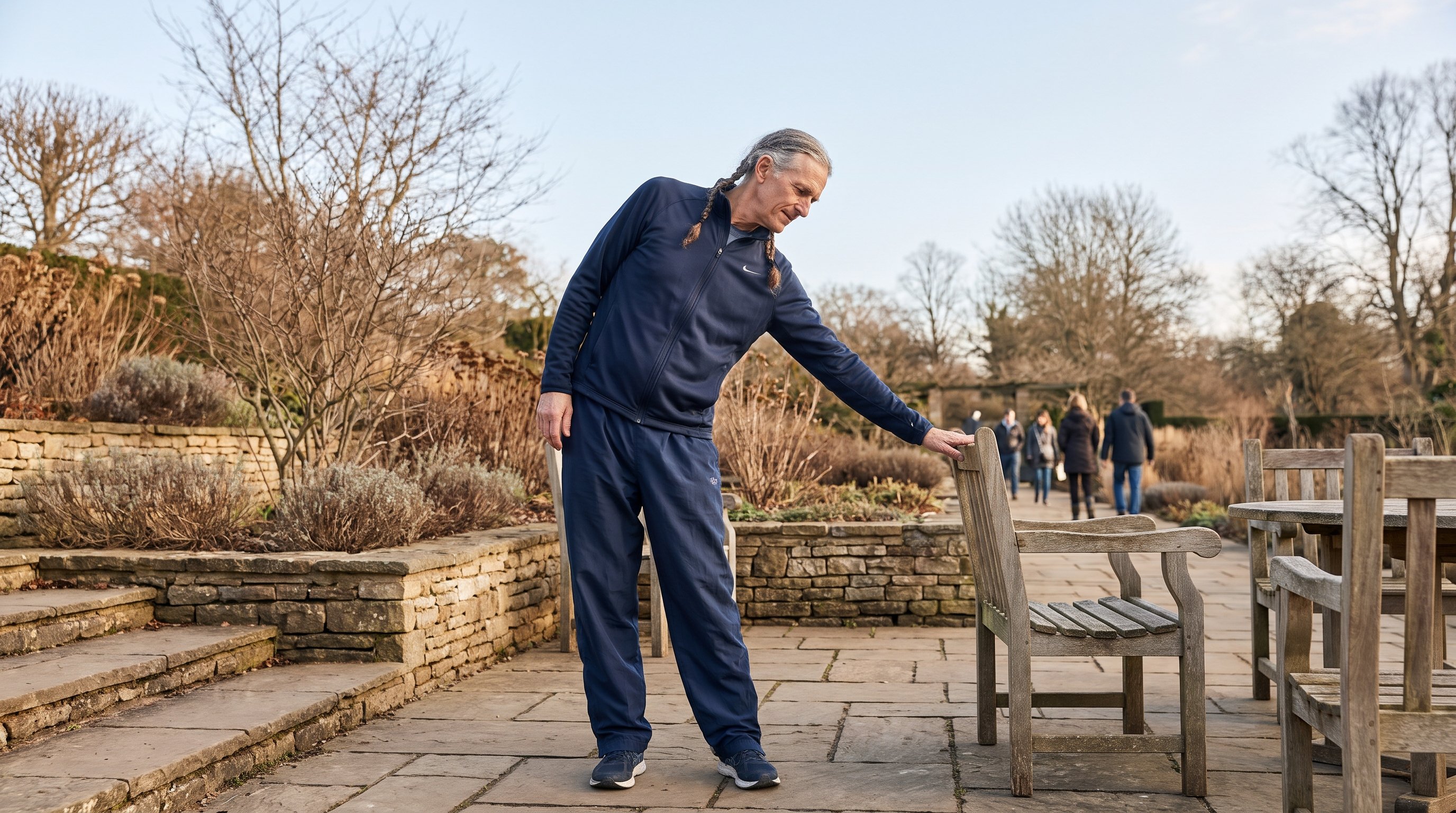
The long weekly class asks for travel, a set time slot, and enough stamina for a full hour, all of which make it easy to skip when the week gets busy. The short daily version asks for almost nothing, which is exactly why it tends to actually happen week after week.
Sessions completed over a month matter more than how hard any single session feels. Five easy ten-minute sessions add up to fifty minutes of movement; one missed hour-long class adds up to zero.
Fitting Gentle Practice Into an Ordinary Day
Mornings are often the easiest time to fit a short session in, before the day's plans take over. A few minutes right after getting up, or alongside a usual cup of tea, can be enough to make it a habit rather than a chore.
Some people prefer tying it to an existing routine, like doing seated stretches while watching the news or during a regular phone call. The trick is attaching the practice to something that already happens daily, so it does not need its own decision every time.
Flexi Yoga builds this kind of routine around a tailored plan, with short guided sessions designed to fit into a normal day rather than taking it over.
Adjusting Gentle Yoga to Different Situations
Starting From Very Little Movement
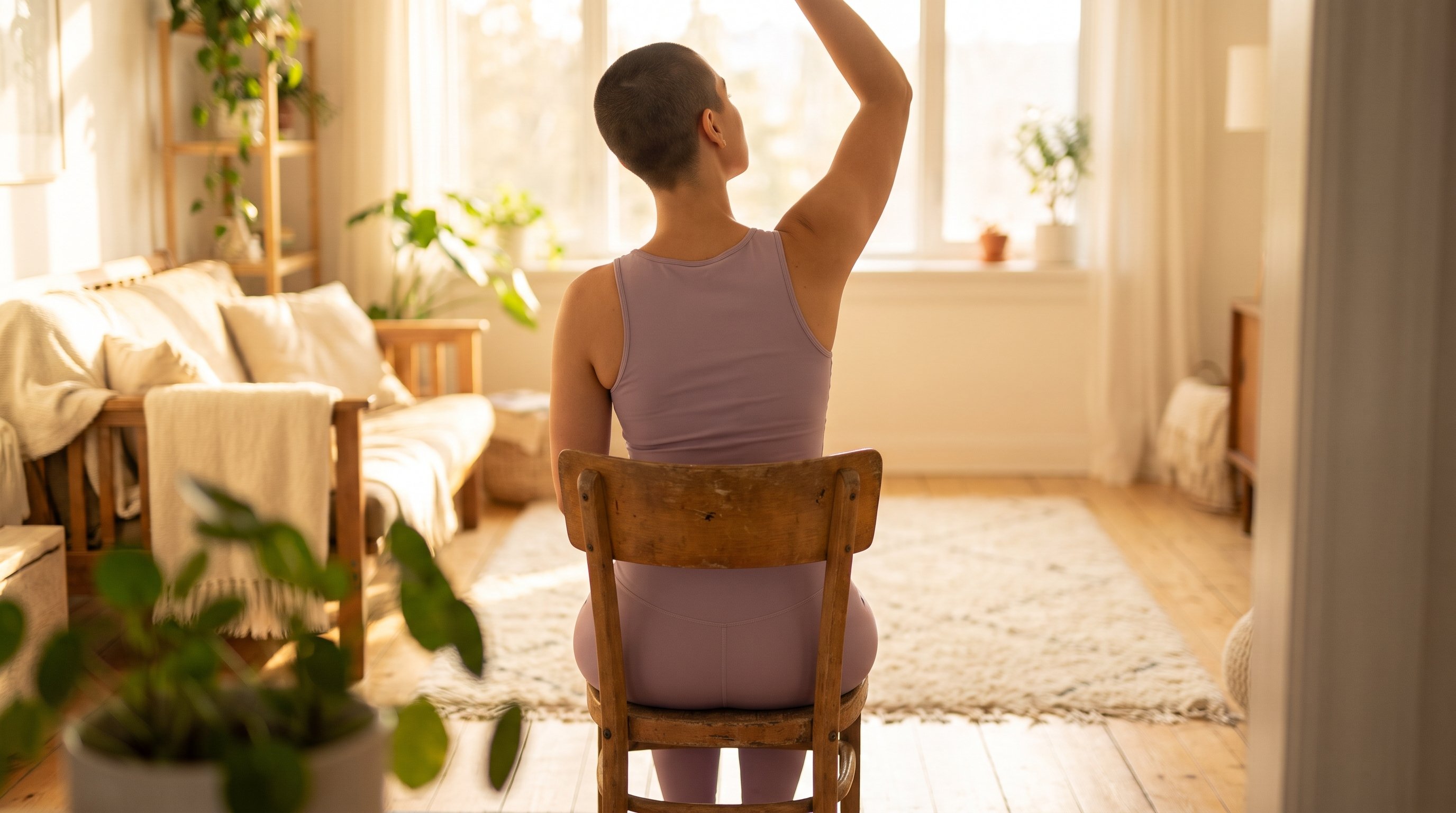
For anyone who has not done any regular movement in a while, chair-based sessions are a reasonable starting point. Standing balance work can wait until seated movements feel comfortable and familiar.
Limited Time or Energy
On low-energy days, five minutes of slow breathing and gentle shoulder rolls still counts as a session. Shortening a routine is better than skipping it altogether.

Living With Stiff or Sensitive Joints
Working within a smaller range of motion is a sensible approach here, stopping well short of any discomfort. Gentle movement is about range and repetition, not depth of stretch.
Balancing With Family or Caregiving Duties
Short sessions fit more easily around other people's schedules than long ones do. Ten minutes squeezed into a quiet moment is often more realistic than a fixed hour set aside each week.
What to Expect and Where Momentum Often Drops
Early sessions can feel slow and underwhelming, which is normal and not a sign that anything is wrong. Comfort with the movements tends to build gradually rather than all at once.
The common drop-off point tends to arrive once the first sense of novelty fades, often a few weeks in, when the routine has not yet become automatic. Keeping sessions short through this stretch, rather than pushing for longer ones, makes it easier to get past.
Progress is better judged by how often sessions happen than by how any single session feels. A week with five short sessions is a good week, even if none of them felt remarkable.
Building Gentle Yoga for Seniors Into a Daily Habit
A routine only works if it is easy to return to on the days motivation runs low. That is the gap Flexi Yoga is built to close.
Flexi Yoga offers a tailored plan made up of hundreds of short, guided sessions, so there is always something gentle and manageable to come back to. Daily trackers cover habits like steps and hydration alongside the movement routine, and a specialist-curated article library keeps the practice informed without adding extra effort to figure it all out.
Move Freely Again
Loosen Up Every Day
Making Gentle Movement a Lasting Part of the Week
Gentle yoga for seniors is not about pushing further each week. It is about showing up often enough that the body gets regular reminders to move through its full comfortable range.
A good next step is picking one short routine and doing it most days this week, rather than waiting for the ideal moment. Flexi Yoga can help keep that pattern going once the first week is done.
FAQ
Gentle yoga helps joints and muscles move through their range more comfortably, but movement alone works slowly without other lifestyle habits like good hydration and regular daily activity. It works well as one part of a broader routine rather than the only piece.
For building a lasting habit, yes, because sessions that feel manageable are the ones that actually get repeated. A short session done five times a week adds up to more total movement than one hard session that gets skipped half the time.
Almost all gentle yoga movements can be done seated in a chair or standing with support from a wall or counter. Floor work is optional, not a requirement for gentle practice.
Nothing is lost by missing a day here and there, since the habit is built on the pattern over weeks, not on a perfect streak. Flexi Yoga's short guided sessions make it simple to pick the routine back up without feeling like starting over.
Share this post