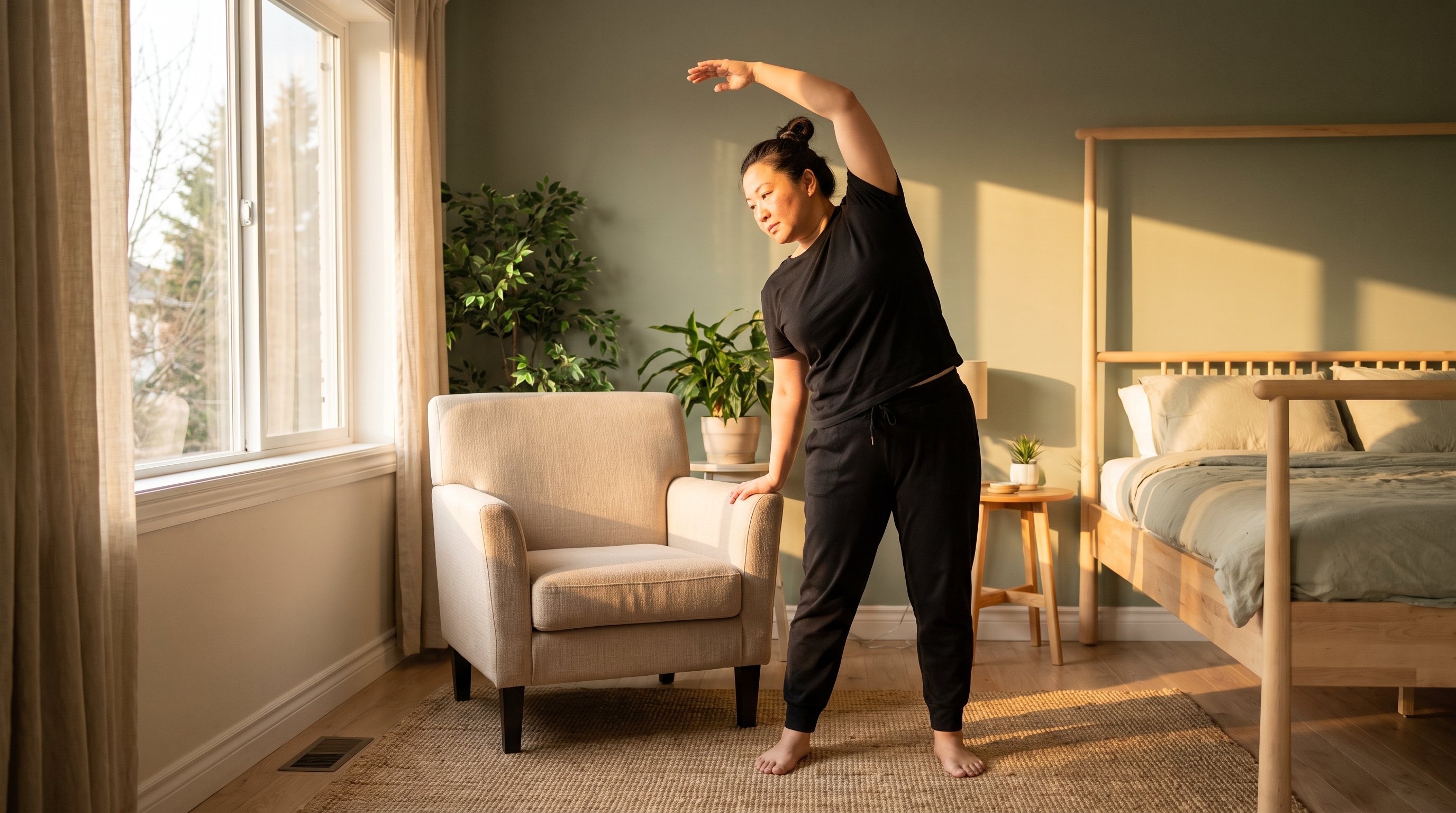
Morning Stretching Routine: A Simple Start to the Day
By:Author:Flexi Yoga Editorial
Updated on:October 28, 2026

- Does Stretching First Thing Actually Loosen You Up?
- Morning Stretching or Evening Stretching: Which Wins?
- Why a Short Daily Stretch Beats a Long Weekend Session
- Adapting a Morning Routine to Different Starting Points
- Making Morning Stretches Fit a Rushed Weekday
- The Myth That Morning Stretching Fixes One Tight Spot
- Building a Morning Stretching Habit With Flexi Yoga
- Keeping a Morning Routine Going Once the Novelty Fades
A morning stretching routine loosens the stiffness that builds up overnight, warms up joints before the day's first demands, and takes only a few minutes to matter.
Muscles and connective tissue lose some pliability after hours of stillness in bed, so a short set of stretches gets blood moving and gives joints a bit more range before you reach for the kettle or the car keys.
This article looks at whether a morning routine really does anything, how it stacks up against stretching later in the day, who needs to adapt it and how, and where a guided flexibility tool fits into keeping it going.
Does Stretching First Thing Actually Loosen You Up?
Lying still for several hours reduces fluid movement around joints and lets muscles settle into a shortened position, which is part of why the first few steps out of bed can feel stiffer than the rest of the day.
Gentle movement reverses that fairly quickly: a slow stretch held for a breath or two encourages blood flow back into the tissue and nudges joints through a fuller range of motion.
The arithmetic is simple. Five stretches held for thirty seconds each comes to two and a half minutes, and even a routine that short, done daily, adds up to roughly seventeen and a half minutes of movement across a week - far less time than most people spend scrolling before they get out of bed.
None of this changes body composition or targets a specific area. It simply gives stiff tissue a chance to move before the day asks more of it.
Morning Stretching or Evening Stretching: Which Wins?
The honest answer is that both have a place, and the choice usually comes down to which one a person will actually keep doing.
Morning stretching addresses the stiffness that builds overnight and sets a looser baseline for the day's movement, while evening stretching works on muscles that have already been used and warmed by daily activity.

| Factor | Morning | Evening |
|---|---|---|
| Best for | Overnight stiffness | Muscles warmed by the day |
| Typical length | 2 to 5 minutes | 5 to 10 minutes |
| Energy level needed | Low, gentle pace | Moderate, slower pace |
| Common barrier | Rushed schedule | Tiredness, skipping it |
| Easiest to pair with | Coffee or breakfast | Winding down for sleep |
Neither option beats the other on paper. The one that fits around an existing habit, like making coffee or brushing teeth, is the one more likely to stick.
Why a Short Daily Stretch Beats a Long Weekend Session
A two-minute stretch every morning and a ninety-minute stretch once a week add up to roughly the same total time across seven days, but they do not produce the same result.
Joints and muscles respond to movement that happens often, not movement that happens hard. Daily short sessions keep tissue mobile between sessions, while a single long one leaves six days of stiffness to rebuild before the next attempt.
Adherence matters more than intensity here. A routine that takes under five minutes is one a person can do even on a chaotic morning, and sessions completed over a month count for more than how deep any single stretch goes.
This is the same logic behind picking the easier version of most habits: the version that gets repeated beats the version that gets postponed.
Adapting a Morning Routine to Different Starting Points
People New to Stretching
Start with two or three gentle stretches held for twenty to thirty seconds, focusing on the neck, shoulders and lower back where morning stiffness tends to show up first.
People With a Packed Morning
A sixty-second sequence done while the kettle boils still counts; even one or two stretches repeated daily beats a longer plan that never happens.

Older Adults
Slower movements, a wider stance for balance and support from a chair or wall where needed all make a morning routine safer without making it less useful.
People Returning After a Break
Dropping back to a shorter, gentler version of a previous routine for the first week or two helps rebuild the habit without overloading tissue that has gone quiet for a while.
Making Morning Stretches Fit a Rushed Weekday
The biggest obstacle to a morning routine is rarely the stretches themselves, it is finding a slot before the day takes over.
Pairing stretches with something that already happens every morning, like waiting for toast or brushing teeth, removes the need to carve out separate time.
A guided routine that plays audio or video cues while you move takes the guesswork out of what comes next, which matters most on the mornings when there is no spare attention to plan a sequence.
Flexi Yoga offers short guided sessions built for exactly this kind of morning window, along with daily habit trackers that make it easier to see the routine actually happening rather than just intended.
The Myth That Morning Stretching Fixes One Tight Spot
A common hope is that stretching one area each morning, a tight hamstring or a cranky lower back, will make that one spot loosen up for good while everything else stays the same.
That is not how the body works. Stretching does not target a single area in isolation; tissue responds to the overall pattern of movement, posture and activity across the whole body, not to a spot treatment.
A tight hamstring that keeps coming back might be influenced by how the hips move, how long someone sits during the day, or how the lower back is loaded - not just how often that one muscle gets stretched.
The realistic approach is a routine that moves several areas regularly, which gradually changes how the whole body feels rather than promising a fix for one stubborn spot.
Building a Morning Stretching Habit With Flexi Yoga
Sticking with a morning routine for more than a few days is usually the hardest part, which is where structure helps more than willpower.
Flexi Yoga builds a tailored flexibility plan around short, guided sessions, so the routine is laid out in advance rather than something to figure out half-asleep.
The app's habit trackers log movement alongside steps and hydration, the lifestyle challenges give small, specific goals to aim at, and the curated article library adds context for anyone who wants to understand the why behind each stretch.

Move Freely Again
Loosen Up Every Day
Keeping a Morning Routine Going Once the Novelty Fades
The first week of a new morning routine is usually easy because it is new; the real test comes once that novelty wears off and the bed feels warmer than the floor.
One concrete action helps more than any other: picking a fixed, tiny version of the routine, even just two stretches, that happens no matter what kind of morning it is, with guided flexibility sessions there as a backup plan on the days when motivation alone is not enough.
FAQ
Many people notice less first-step stiffness within a week or two of consistent practice, though the exact timing varies by person and by how stiff mornings were to start with. There is no fixed figure to expect, just a gradual shift as the habit builds.
Stretching alone loosens tissue and supports joint range, but movement throughout the day matters too, and food choices play their own separate role in overall wellness. Stretching is a useful piece of the picture, not a complete substitute for an active day.
A single stretch held for thirty seconds while the coffee brews still counts and is easier to repeat than a longer sequence that gets skipped. Flexi Yoga's shorter guided sessions are built with exactly this kind of rushed morning in mind.
Novelty fades for every new habit, and a morning routine is no exception, especially once the initial stiffness that prompted it starts to ease. Tying the routine to an existing habit, like brushing teeth, and keeping the version small enough to do on a bad day both help it survive past the drop-off point.
Share this post