Mobility Exercises for Seniors: A Gentle Way to Move Easier
By:Author:Flexi Yoga Editorial
Updated on:October 28, 2026

- A Sample Week of Gentle Joint Movement
- How Often Mobility Work Actually Needs to Happen
- Why Gentle Daily Movement Beats a Hard Weekly Workout
- Working Mobility Exercises Into an Ordinary Day
- Adapting Mobility Work to Different Needs
- How Mobility Progress Unfolds and Common Stopping Points for Seniors
- Guided Mobility Sessions and Tracking Your Progress
- Making Mobility a Normal Part of Later Life
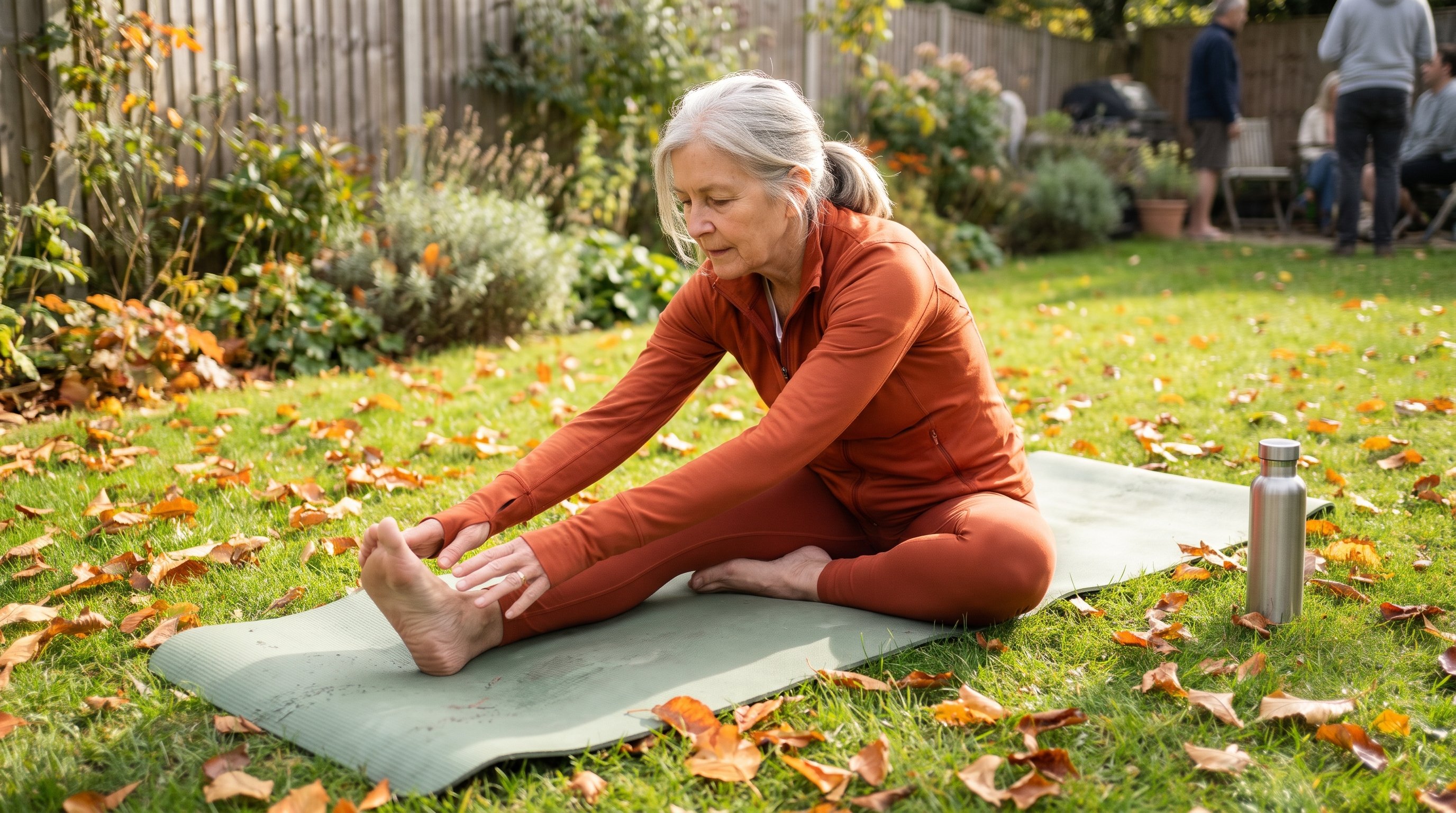
Mobility exercises for seniors work by taking a joint through its full available range, little and often, so the body does not forget how to move that way. The honest answer: short daily sessions do more for joint comfort than one long workout ever could.
Joints and the tissue around them respond to movement signals. Skip those signals for days at a time and stiffness creeps back in, which is why frequency tends to matter more than duration.
This guide covers what a sample week looks like, how often to practise, why gentle and frequent beats occasional and intense, and how to adapt the approach to different situations.
A Sample Week of Gentle Joint Movement
There is no need to overhaul a whole week at once. A simple rotation through major joints, spread across the days, covers the basics without feeling like a chore.
A Week of Mobility Focus Areas
- Monday - ankles and feet, seated circles and toe raises
- Tuesday - shoulders and neck, gentle rolls and reaches
- Wednesday - hips, seated marches and gentle rotations
- Thursday - wrists and hands, flexes and gentle squeezes
- Friday - knees and lower back, slow bends and cat-cow style movement
- Weekend - a lighter mixed session, whichever area feels tightest
None of these need special kit or a lot of space. A sturdy chair and a few spare minutes is usually enough.
How Often Mobility Work Actually Needs to Happen
Daily Beats Occasional
Mobility exercises for seniors tend to work best as short daily habits rather than a single weekly block. A joint that moves a little every day holds onto its range better than one that only moves hard once a week.
| Goal | Frequency | Session Length |
|---|---|---|
| General stiffness | Daily | 5 to 10 minutes |
| Specific joint focus | 3 to 5 times weekly | 10 minutes |
| Maintenance only | 4 times weekly | 5 minutes |
| Recovering from a quiet spell | Daily, lighter | 5 minutes |
Five minutes a day adds up to roughly 35 minutes a week, which is more total movement than one 20-minute weekly session delivers.
Why Gentle Daily Movement Beats a Hard Weekly Workout
Picture two routines: a hard 45-minute weekly fitness class versus five minutes of gentle daily mobility work. The weekly class is easy to skip when energy is low, weather is bad, or life gets in the way, and missing it means a full week with no movement signal at all.
The daily version is easier to keep up because it asks so little each time. Five minutes before breakfast or in front of the television is rarely the thing that gets cancelled.
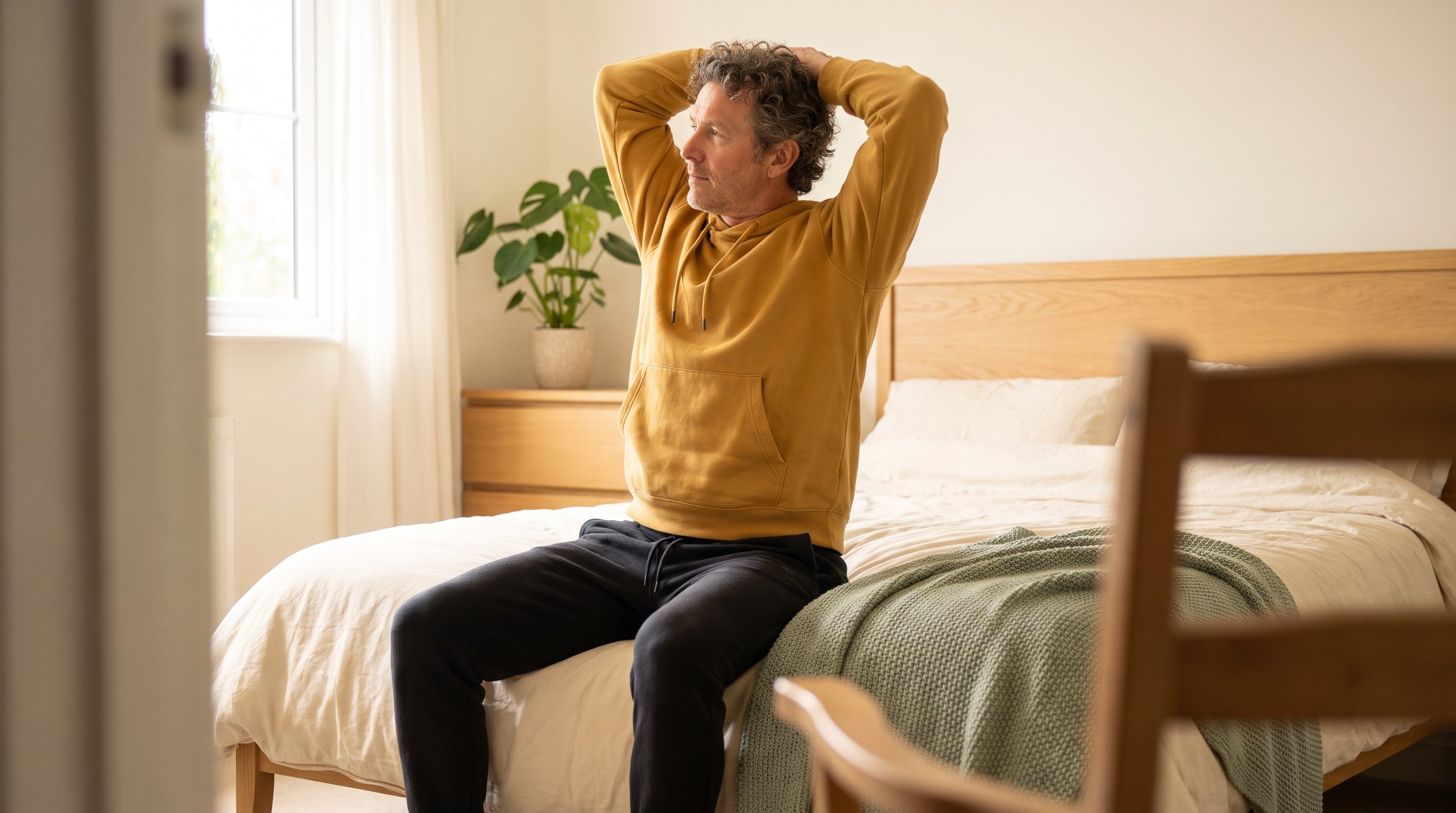
Consistency, not intensity, is what keeps a joint moving through its range over the months ahead. A routine that gets done most days beats an intense plan that gets done rarely.
Working Mobility Exercises Into an Ordinary Day
The easiest way to keep a mobility habit alive is to attach it to something that already happens every day, like the kettle boiling or a favourite programme starting.
Ankle circles while seated at breakfast, shoulder rolls during a phone call, or gentle hip marches while watching television all count.
Guided routines built around short, easy sessions offer a plan to follow rather than guesswork about what to do each day.
Daily habit trackers can also help keep tabs on small wins, like hydration or step goals, alongside the movement itself.
Adapting Mobility Work to Different Needs
Just Starting Out
Begin with seated versions of every movement and keep ranges small. The goal at this stage is building the habit, not reaching full range on day one.
Managing a Busy Household
Short sessions scattered through the day work just as well as one block, so two minutes here and three minutes there still counts. Linking movement to existing routines, like waiting for the kettle, removes the need to find extra time.
Living With Joint Stiffness
Smaller ranges and slower pace matter more than pushing further on any given day. Warming up with a few gentle reps before attempting a fuller stretch tends to feel more comfortable.
Returning After a Quiet Spell
Start back at the lightest version of each movement, even if more was manageable before. Range tends to come back faster than it left, so patience in the first week or two pays off.
How Mobility Progress Unfolds and Common Stopping Points for Seniors
Early on, the main change is simply noticing stiffness less first thing in the morning or after sitting for a while. Bigger shifts in range of movement tend to take longer, and the pace varies a lot from person to person.

The common drop-off point is around the third or fourth week, once the initial novelty fades and the routine has not yet become automatic.
Sticking with the smallest version of the habit through that stretch, even on an off day, is usually what carries people through to the other side.
Guided Mobility Sessions and Tracking Your Progress
Flexi Yoga brings together a tailored exercise plan, guided sessions and progress tracking in one place, so the planning part is already done.
The app's hundreds of short, guided sessions are designed to improve flexibility and ease joint stiffness without needing a gym membership or exhausting workouts, which suits a routine built around a few minutes a day.
Lifestyle challenges and a specialist-curated article library add structure for anyone who likes a bit of direction, while audio and video content means sessions can fit around a schedule rather than the other way round.

Move Freely Again
Loosen Up Every Day
Making Mobility a Normal Part of Later Life
Mobility exercises for seniors do not need to be complicated or long to be worth doing. A few minutes a day, aimed at the joints that feel stiffest, is a reasonable place to start.
Pick one time of day, attach it to something already happening, and let guided routines handle the rest of the planning so the habit has the best chance of sticking.
FAQ
Most people notice more from doing a little every day than from one longer session a week, since joints respond to frequent, gentle signals. Even five minutes daily adds up to more total movement than a single 20-minute weekly block.
Starting later just means beginning with smaller ranges and shorter sessions, not skipping the habit altogether. Gentle daily movement can still be worked into a routine at any stage, adjusted to whatever feels manageable today.
Mobility work does not need a dedicated block of time, since a few minutes spread across the day counts just as well. Attaching movement to an existing habit, like making tea, is usually enough to keep it going.
This is the point where most people stop, so keeping the smallest version of the routine going matters more than doing it perfectly. Flexi Yoga's guided sessions and progress tracking can help keep the habit visible even when motivation dips.
Share this post