Does Yoga Help With Flexibility? A Clear Look at the Mechanism
By:Author:Flexi Yoga Editorial
Updated on:October 28, 2026
- The Myth That One Yoga Session Unlocks Instant Flexibility
- How Yoga Actually Changes Your Range of Motion
- Three Things That Decide How Far Yoga Flexibility Goes
- A Sample Week of Yoga Stretching Worth Copying
- Working Yoga Flexibility Into a Packed Schedule
- What to Expect Week by Week With Yoga Flexibility
- Mistakes That Slow Down Yoga Flexibility Progress
- Building Steady Flexibility Gains With Flexi Yoga
- Making Yoga Flexibility Part of How You Move
Yes, yoga helps with flexibility, and the reason is simple: it repeatedly moves joints and muscles through a fuller range than daily life usually asks for.
The mechanism isn't magic. Holding a stretch position gives muscle fibres and connective tissue time to lengthen, and the nervous system slowly accepts that range as normal and safe.
This article covers what the stretch response actually does, what changes the result, a sample week, where people tend to quit, and how a guided routine can keep the habit going.
The Myth That One Yoga Session Unlocks Instant Flexibility
A single class will not turn stiff hamstrings into a full forward fold, and no routine can target flexibility to one body part while leaving the rest untouched.
The body doesn't work that way. Muscle and connective tissue adapt gradually across the whole system, not in one spot picked out in advance.
The honest answer is less dramatic but more useful: flexibility builds through repeated sessions over weeks, with range of motion improving a little at a time across the areas you actually work.
How Yoga Actually Changes Your Range of Motion
Two separate processes are at work every time you move through a yoga stretch, and both matter for lasting change.
Tissue Lengthening Over Repeated Sessions
Muscle and the connective tissue around it respond to repeated gentle loading by gradually allowing more length before resistance kicks in.
This is a slow, cumulative process, not something that happens inside a single hold.
The Nervous System Resetting Its Limits
A lot of felt tightness is the nervous system protecting a joint rather than tissue actually being short.
Regular, controlled stretching teaches the nervous system that a deeper range is safe, so it stops pulling the brakes on as early.
Three Things That Decide How Far Yoga Flexibility Goes
Not every yoga routine produces the same result, and three factors explain most of the difference.
Factors That Shape Flexibility Gains
- Frequency - short sessions done most days beat one long session a week, because tissue and the nervous system adapt through repetition, not duration.
- Consistency over time - flexibility fades when stretching stops, so a routine kept going across weeks and months outperforms a burst of effort that peters out.
- Range worked, not just time held - gently moving toward your current edge matters more than forcing a position, since the nervous system responds better to control than to strain.
A Sample Week of Yoga Stretching Worth Copying
A workable week doesn't need to be long, it just needs to repeat.
| Day | Focus |
|---|---|
| Monday | Hips and lower back |
| Tuesday | Shoulders and neck |
| Wednesday | Rest or light walk |
| Thursday | Hamstrings and calves |
| Friday | Full body flow |
| Saturday | Spine and chest opening |
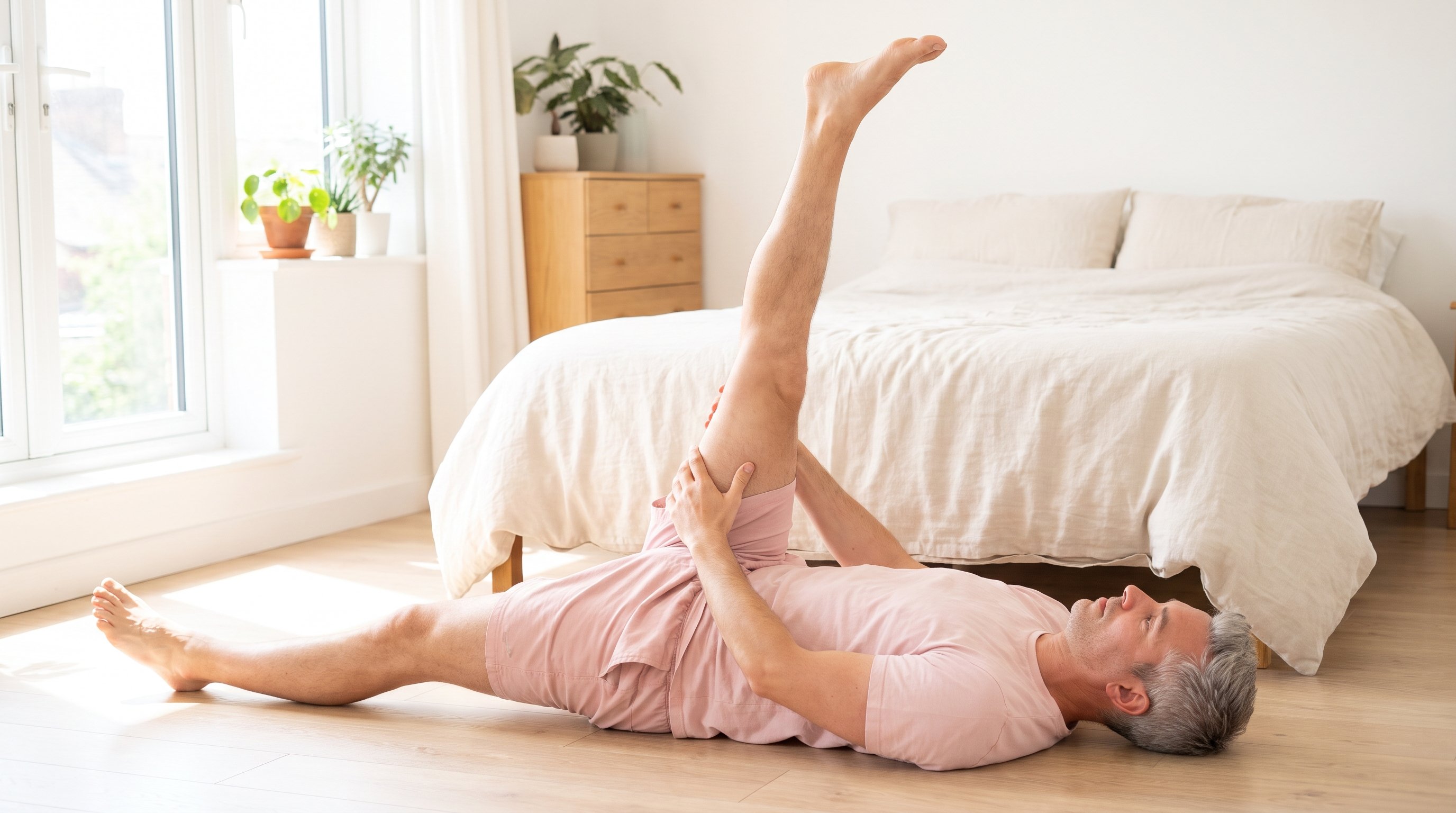
Sunday stays open as a flexible rest day, which keeps the week realistic rather than rigid.
Working Yoga Flexibility Into a Packed Schedule
Most people don't quit stretching because it's hard, they quit because it never gets a fixed slot in the day.
Attaching a short session to something that already happens daily, like right after brushing teeth or before bed, removes the need to decide each time.
A guided plan through Flexi Yoga breaks this down into short sessions that fit around work and family life, so the routine survives busy weeks instead of getting dropped at the first clash.
What to Expect Week by Week With Yoga Flexibility
Early weeks often feel slow, and that's normal rather than a sign something's wrong.
The nervous system tends to loosen its grip before tissue itself lengthens much, so early sessions can feel easier even before visible range improves.
This is the stretch where motivation commonly dips, simply because the changes are felt before they're seen, so sticking with the schedule matters more than judging week four against week one.
Mistakes That Slow Down Yoga Flexibility Progress
Stretching Only When It Feels Tight
Waiting for stiffness before stretching means sessions become irregular, and irregular input gives the nervous system nothing consistent to adapt to.
Forcing a Deeper Stretch Too Soon
Pushing hard into a position tends to trigger a protective tightening response, which works against the very range you're trying to gain.

Skipping the Areas That Feel Fine
Flexibility across the whole body supports easier movement overall, so focusing only on the obviously stiff spot leaves other joints unattended.
Expecting a Straight Line of Progress
Range of motion naturally varies day to day with sleep, stress and activity, so a slightly tighter session doesn't mean progress has stopped.
Building Steady Flexibility Gains With Flexi Yoga
Flexibility gains add up through sessions completed, not through how hard any single session feels, which is why adherence matters more than intensity.
Flexi Yoga offers a tailored plan built around your current range, with hundreds of short, guided sessions designed to improve flexibility and ease joint stiffness without needing a gym membership or exhausting workouts.
Daily trackers, hand-picked challenges and a specialist-curated article library sit alongside the sessions, so progress stays visible and the habit has more reasons to continue.
Move Freely Again
Loosen Up Every Day
Making Yoga Flexibility Part of How You Move
Flexibility isn't a fixed target to hit once, it's a range the body keeps or loses depending on what it's regularly asked to do.
Picking one short session today, and repeating it most days, matters more than finding the perfect routine on paper.
Flexi Yoga can hold that structure for you, so the habit has a clear place to live instead of depending on willpower alone.
FAQ
Both happen, and they're connected - the nervous system eases its protective grip first, which creates the looser feeling, while tissue length catches up over repeated sessions.
Starting point affects pace, not whether change is possible, since the same lengthening and nervous system adaptation applies regardless of where range begins.
A full class isn't required, as short sessions done consistently tend to beat one long weekly session; a guided plan through Flexi Yoga can fit sessions into minutes rather than hours.
Range of motion depends on ongoing input, so when sessions stop the nervous system and tissue gradually settle back toward their old baseline, which is why restarting feels like starting over.
Share this post