Joint Stiffness Treatment: A Gentle Movement-Based Approach
By:Author:Flexi Yoga Editorial
Updated on:October 28, 2026

- Does Gentle Movement Actually Ease Joint Stiffness?
- Daily Gentle Movement Versus One Weekly Hard Session
- Why Short Frequent Sessions Beat One Demanding Workout
- Adapting Gentle Movement to Different Starting Points
- Working Joint Movement Into an Already Full Day
- The Myth That One Stretch Clears Stiffness for Good
- Building Joint Stiffness Treatment Into a Flexi Yoga Plan
- Making Stiffness Relief a Normal Part of the Week
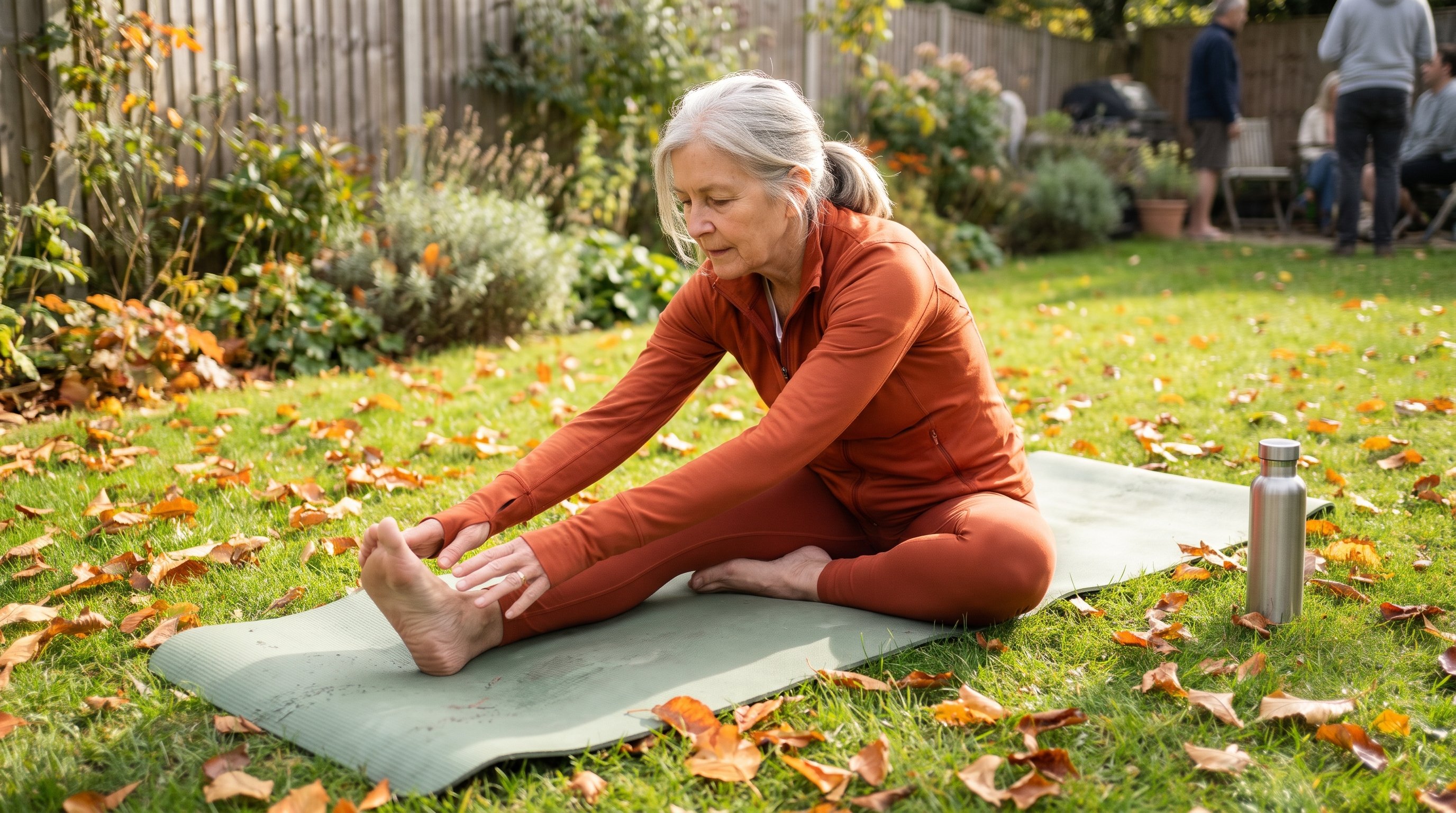
The most useful joint stiffness treatment isn't a single fix at all - it's regular, gentle movement that keeps joints lubricated and muscles around them loose. Stiffness tends to build when joints sit unused for long stretches, so short sessions done often beat one hard push now and then.
Joints rely on movement to circulate the fluid that keeps cartilage fed and tissues supple. Sitting still lets things tighten up; moving through a joint's range, even gently, keeps that process going.
This article covers whether gentle movement actually works, how it compares to tougher alternatives, who needs to adjust it, and how to fit it into a normal week.
Does Gentle Movement Actually Ease Joint Stiffness?
Yes, within reason. Moving a joint through its available range, even slowly, encourages the fluid inside it to circulate, which is part of what keeps the joint feeling less stiff after use.
The arithmetic is simple. A joint moved for five minutes a day adds up to roughly 35 minutes a week, and 35 minutes spread across seven short sessions is easier to sustain than one 35-minute session squeezed in once.
Consistency is what adds up, not the length of any single session. Skipping a day doesn't undo progress, but skipping most days for weeks at a stretch gives stiffness room to settle back in.
There's no shortcut that bypasses repetition. The honest answer is that gentle, frequent movement works because it's repeatable, not because any one stretch is special.
Daily Gentle Movement Versus One Weekly Hard Session
This is the real decision most people weighing joint stiffness treatment face: a few minutes of gentle movement most days, or a longer, tougher session once a week.
| Approach | Time Needed | Typical Effect |
|---|---|---|
| Daily gentle movement | 5-10 min a day | Steady, ongoing ease |
| Weekly hard session | 45-60 min once | Short relief, stiffness returns |
| Daily gentle movement | Low effort each time | Easier to repeat |
| Weekly hard session | High effort once | Easier to skip |
| Daily gentle movement | Fits around a day | Builds into habit |
The table makes the gap obvious. Joints that get moved a little every day stay in a steadier state than joints that get one big push and then sit still for six days.
Why Short Frequent Sessions Beat One Demanding Workout
The adherence argument is straightforward. A five-minute routine is something most people can finish even on a bad day, while a demanding hour-long session is the first thing to get cancelled when life gets busy.
Missed sessions are where joint stiffness treatment usually falls apart, not poor technique. If the bar for showing up is low, showing up happens more often, and frequency is what keeps a joint supplied with the movement it needs.

A tough weekly class also risks pushing a stiff joint too hard too fast, which can leave it feeling worse for a day or two afterward. Gentle and frequent avoids that swing and keeps progress moving in one direction.
Adapting Gentle Movement to Different Starting Points
Beginners With No Routine Yet
Start with one joint area a day rather than trying to move everything at once. A short, slow routine done consistently beats an ambitious one done twice and abandoned.
Busy People Squeezing It Into a Packed Day
Attach the movement to something already happening, like stretching while the kettle boils or during a work call. Two or three minutes at different points in the day still adds up.
Older Adults Managing Longstanding Stiffness
Slower, smaller-range movement is often more comfortable and still effective, since the goal is circulation through the joint, not a big stretch. Building up range gradually matters more than reaching it quickly.
Anyone Returning After a Long Break
Expect the first week back to feel stiffer than it will later on. Easing back in with shorter sessions avoids discouragement and lowers the chance of overdoing it on day one.
Working Joint Movement Into an Already Full Day
The sessions that survive a busy week are the ones that don't need extra planning. Pairing movement with an existing habit - brushing teeth, waiting for the microwave, watching the news - removes the need to remember a separate appointment with yourself.
This is where a guided plan helps rather than hinders. Flexi Yoga offers short, guided sessions that fit into gaps like these, along with daily trackers that make it easy to see whether movement happened that day without having to keep a mental tally.
Having the routine mapped out removes the decision-making that often causes people to skip a session. Open the app, follow the short routine, move on with the day.
The Myth That One Stretch Clears Stiffness for Good
No single stretch, movement or session fixes stiffness permanently, and the body doesn't let you target one joint in isolation while ignoring the rest. Stiffness tends to build gradually across areas that move the least, so easing it works the same way, gradually and across those same areas.
There's no overnight version of this either. The honest answer is that gentle, repeated movement over weeks is what keeps stiffness from settling back in, not a single magic stretch done once and forgotten.

Expecting one session to undo stiffness that built up over months sets anyone up for disappointment. Expecting steady, small sessions to keep things easier over time is the realistic version worth aiming for.
Building Joint Stiffness Treatment Into a Flexi Yoga Plan
A tailored plan takes the guesswork out of where to start and what to do next. Flexi Yoga builds a plan around your goals, with hundreds of short, guided sessions aimed at improving flexibility, supporting joint health and easing stiffness without needing a gym membership or exhausting workouts.
Alongside the exercise sessions, the app includes daily trackers for steps, hydration and wellness routines, plus challenges that encourage small, steady changes rather than dramatic overhauls. There's also a curated article library and audio and video content to keep the whole process varied and easy to stick with.

Move Freely Again
Loosen Up Every Day
Making Stiffness Relief a Normal Part of the Week
Pick one joint area that bothers you most and give it two short sessions tomorrow, not next Monday. Starting small and starting now beats waiting for a perfect routine that never quite begins.
Flexi Yoga can sit alongside that first step, offering a guided structure once the habit of moving daily starts to take hold.
FAQ
There's no fixed timeline, since it depends on how long the stiffness has been building and how consistently movement happens. Gentle, repeated sessions tend to matter more than the length of any single one.
Complete rest often makes stiffness worse because joints rely on movement to keep fluid circulating around them. Gentle movement within a comfortable range is usually more helpful than staying still.
A proper routine isn't required to start - a few minutes attached to something already happening in the day counts. Short, guided sessions through Flexi Yoga are built for exactly this kind of gap.
Early stiffness often eases first, and once the obvious discomfort fades it's easy to assume the work is done. Keeping sessions short and attached to a daily cue helps carry the habit past that point.
Share this post