Knee Mobility Exercises: A Simple Way to Move Freer
By:Author:Flexi Yoga Editorial
Updated on:October 28, 2026
- Do Knee Mobility Exercises Actually Loosen a Stiff Joint?
- How Knee Mobility Work Changes the Joint Over Time
- How Often Joint Mobility Work Needs to Happen
- Why Gentle Daily Reps Beat an Intense Gym Session
- Making Joint Mobility Work Fit Around a Busy Day
- The Myth That One Stretch Fixes a Stiff Knee for Good
- Three Factors That Decide How Far Knee Mobility Improves
- Common Mistakes That Slow Down Progress
- Building Knee Mobility Exercises Into a Flexi Yoga Routine
- Keeping Knee Mobility a Normal Part of Everyday Life
Knee mobility exercises work by moving the joint through its full range in a controlled way, which keeps the surrounding muscles and tissue used to that range instead of stiffening up around it.
The knee is a hinge joint that depends on the muscles around it - quads, hamstrings, calves - to support bending and straightening without strain, so gentle repeated movement is what keeps that support working.
This guide covers whether these exercises actually do anything, how the mechanism works, how often to practise them, where people go wrong, and how to build the habit so it actually lasts.
Do Knee Mobility Exercises Actually Loosen a Stiff Joint?
Yes, in the sense that moving a joint regularly through its available range keeps that range more accessible than leaving it unused.
The mechanism is simple: muscles and connective tissue around the knee adapt to whatever range they're asked to do often. Sit most of the day and the knee rarely goes past a shallow bend, so that's the range the body gets efficient at protecting.
Add a few minutes of controlled bending, straightening and light rotation most days and the joint gets practice moving further, which is the honest arithmetic behind why gentle daily work tends to help more than occasional stretching.
How Knee Mobility Work Changes the Joint Over Time
Two things happen when joint mobility work becomes routine: the muscles around the joint get more used to working through a full range, and the joint itself gets more regular movement of its fluid and tissue.
The Muscles Around the Knee Do Most of the Work
The knee itself has limited movement, but the quads, hamstrings and calves control how far and how smoothly it bends. Exercises that gently lengthen and strengthen these muscles give the knee more support through its range, rather than changing the joint directly.
Regular Movement Keeps the Joint Used to Moving
Joints that sit in one position for long stretches - a desk chair, a car seat - get less practice moving fully. Short sessions of controlled bending and straightening give the joint that practice back, which is why consistency matters more than any single stretch.
How Often Joint Mobility Work Needs to Happen
Short and Frequent Beats Long and Rare
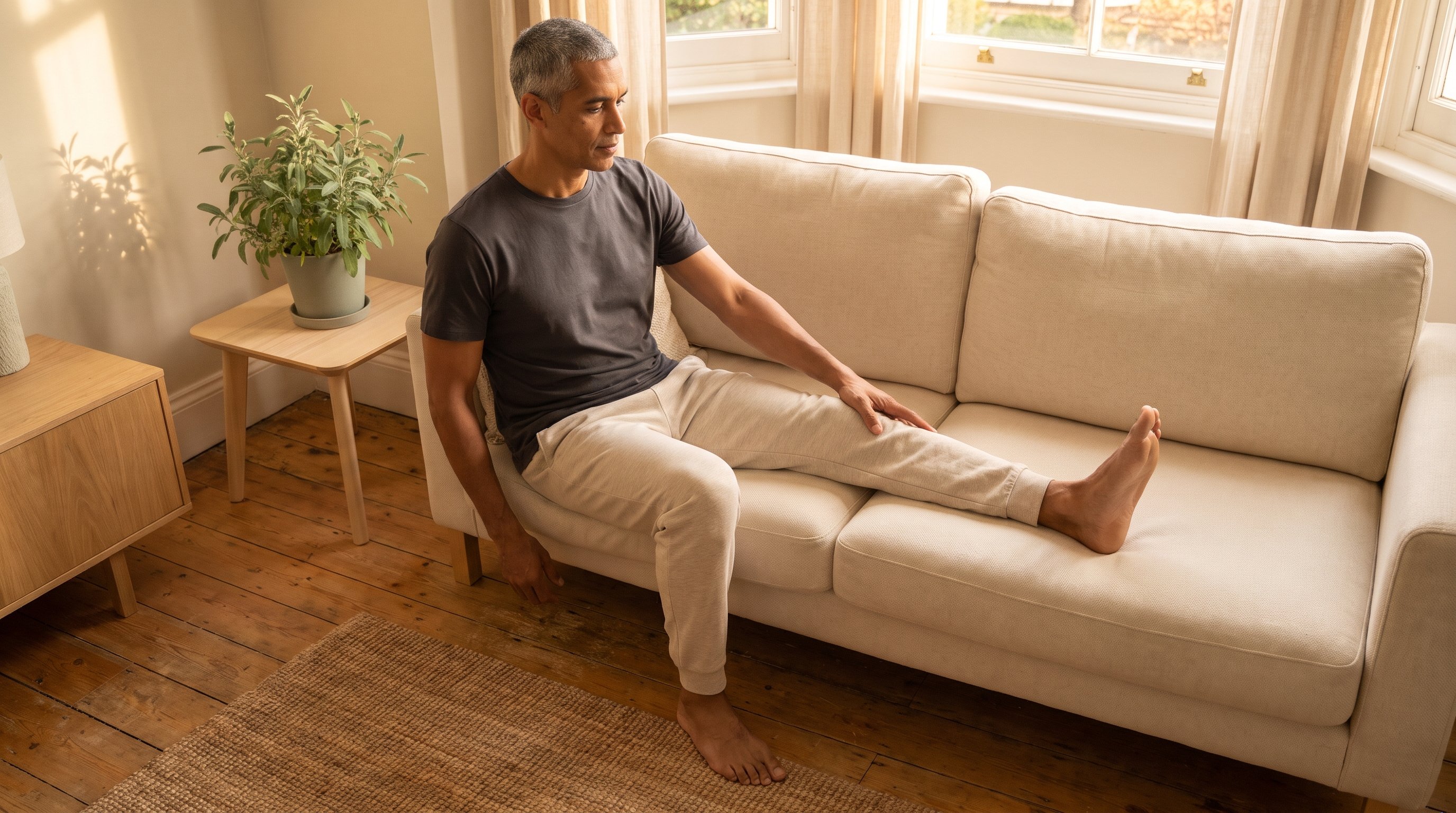
A few minutes most days gives the knee more total practice time across a week than one longer session squeezed in once. Five minutes, six days a week, adds up to 30 minutes of movement - more than a single 20-minute session on a Sunday.
The table below is a simple way to apply this across a normal week.
| Day | Focus |
|---|---|
| Monday | Gentle bend and straighten |
| Wednesday | Light rotation and calf work |
| Friday | Hamstring and quad focus |
| Saturday | Full range, slower pace |
Why Gentle Daily Reps Beat an Intense Gym Session
Picture two routes to the same goal: five minutes of gentle knee work most days, or one hard hour at the gym once a week aimed at the same joint.
The gym session feels more productive in the moment, but it's easy to skip when the week gets busy, and a single hard session on a stiff joint can leave it feeling worse rather than better the next day.
The short daily version asks less each time, so it's easier to actually finish, and finishing it regularly is what builds the range back up - adherence beats intensity here, arithmetically and practically.
Making Joint Mobility Work Fit Around a Busy Day
Most people don't skip this kind of work because it's hard - they skip it because it's easy to forget when there's no fixed slot for it.
Attaching it to something already happening - after brushing teeth, before sitting down to work, while the kettle boils - removes the need to remember a separate appointment.
A guided plan can help here too: Flexi Yoga offers short, tailored exercise sessions that fit into a normal schedule rather than demanding a block of free time, so the routine survives busier weeks.
The Myth That One Stretch Fixes a Stiff Knee for Good
No single stretch fixes a knee permanently, and there's no exercise that targets just the knee while leaving everything else untouched - the body doesn't work in isolated zones like that.
The knee's range depends on the hips, ankles and the muscles running between them, so mobility work tends to help as part of a wider pattern of movement rather than a one-off fix.
The honest answer is that range comes back gradually with repeated, varied movement - there's no shortcut that skips the time it takes to build that back.
Three Factors That Decide How Far Knee Mobility Improves
Not every factor matters equally - these three make the biggest difference to how much range comes back.
What Actually Moves the Needle
- How often you move the joint - a few short sessions most days beats one long session once a week.
- Whether you work the muscles around it - quads, hamstrings and calves support the knee's range, so strengthening them matters as much as stretching.
- How gradually you progress - pushing too far too soon tends to backfire, while slow, steady increases in range tend to hold.
Common Mistakes That Slow Down Progress
Forcing the Range on a Cold Joint
Pushing a stiff knee into a deep bend first thing, without any warm-up, tends to make it feel tighter rather than looser. Starting with small, slow movements and building up gradually gives the joint time to adjust.
Only Stretching and Never Strengthening
Stretching alone doesn't give the knee the support it needs to hold a new range. Pairing gentle stretches with light strengthening for the muscles around the joint tends to hold progress better.
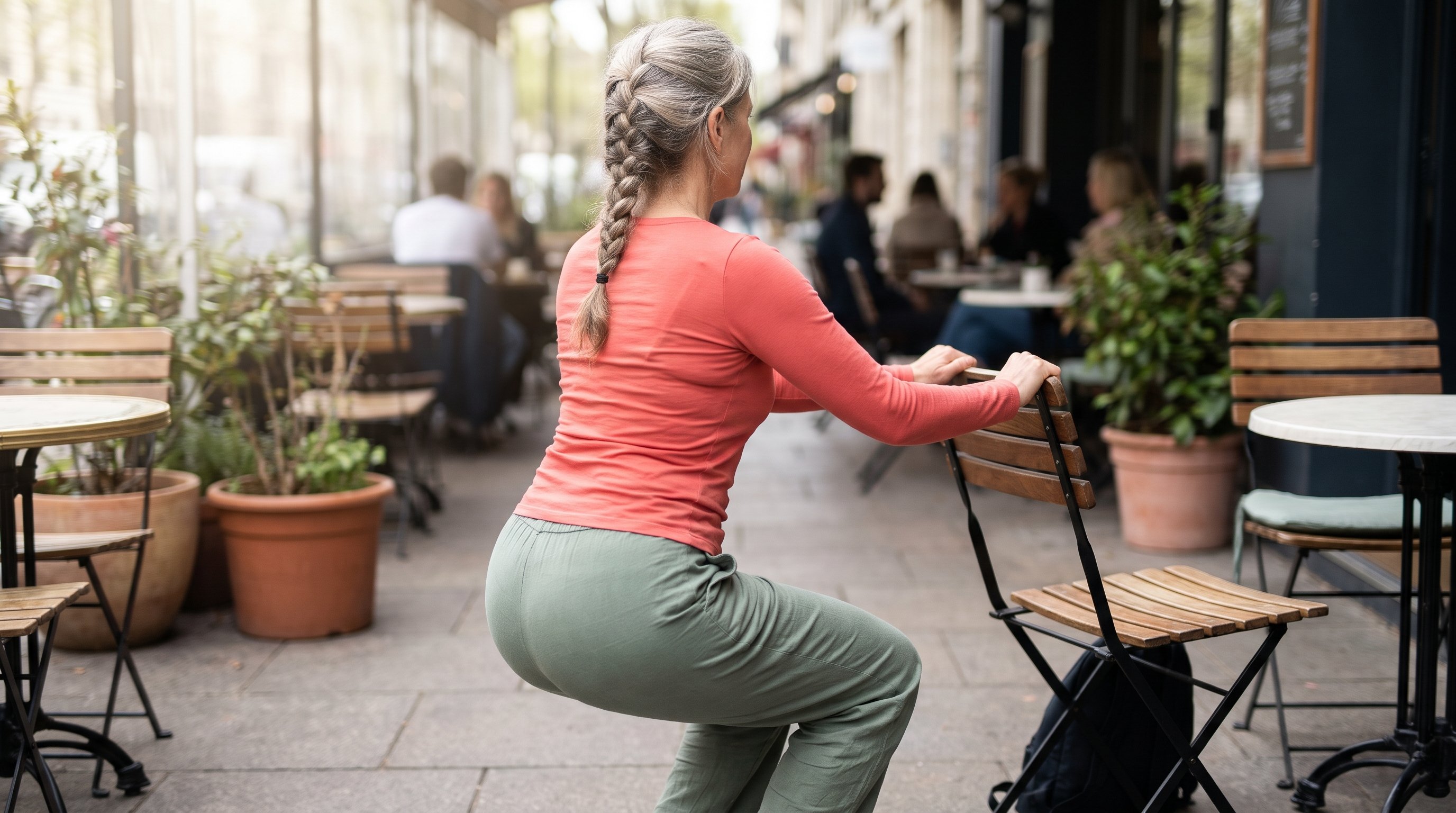
Doing It Once and Expecting It to Stick
One good session doesn't carry across a week of sitting still. Short, regular sessions matter more than any single effort, however thorough.
Ignoring the Hips and Ankles
The knee doesn't move in isolation - tight hips or stiff ankles change how it bends. Working a little on the joints above and below the knee tends to make knee work more effective.
Building Knee Mobility Exercises Into a Flexi Yoga Routine
Knowing the right exercises is one thing - actually doing them often enough to matter is the harder part, and that's where most routines quietly fall apart.
Flexi Yoga builds a tailored flexibility plan around short, guided sessions, so knee mobility work fits into a normal day instead of competing with it.
The app also includes daily habit trackers, a specialist-curated article library, and audio and video routines, which gives the habit more to hold onto than willpower alone.
Move Freely Again
Loosen Up Every Day
Keeping Knee Mobility a Normal Part of Everyday Life
The most useful thing anyone can do today is pick one small movement - a slow bend and straighten, a few gentle rotations - and attach it to something already in the daily routine.
Flexi Yoga can take the guesswork out of what to do and when, turning a good intention into a routine that's easier to keep up over the weeks ahead.
FAQ
It varies by person and starting point, so it's best to avoid pinning it to a fixed number of weeks. Consistency over time tends to matter more than how quickly it shows up.
Forcing a cold joint into a deep range too fast can leave it feeling tighter, not better. Starting gently and building up gradually avoids that problem.
A few minutes attached to something already happening - like before sitting down at a desk - counts more than waiting for a free hour that rarely comes. Flexi Yoga's short guided sessions are built around exactly this kind of limited time.
Yes, that drop-off is common once the initial novelty fades and life gets busy again. Tracking small sessions and keeping them short makes it easier to pick the habit back up rather than starting from zero.
Share this post