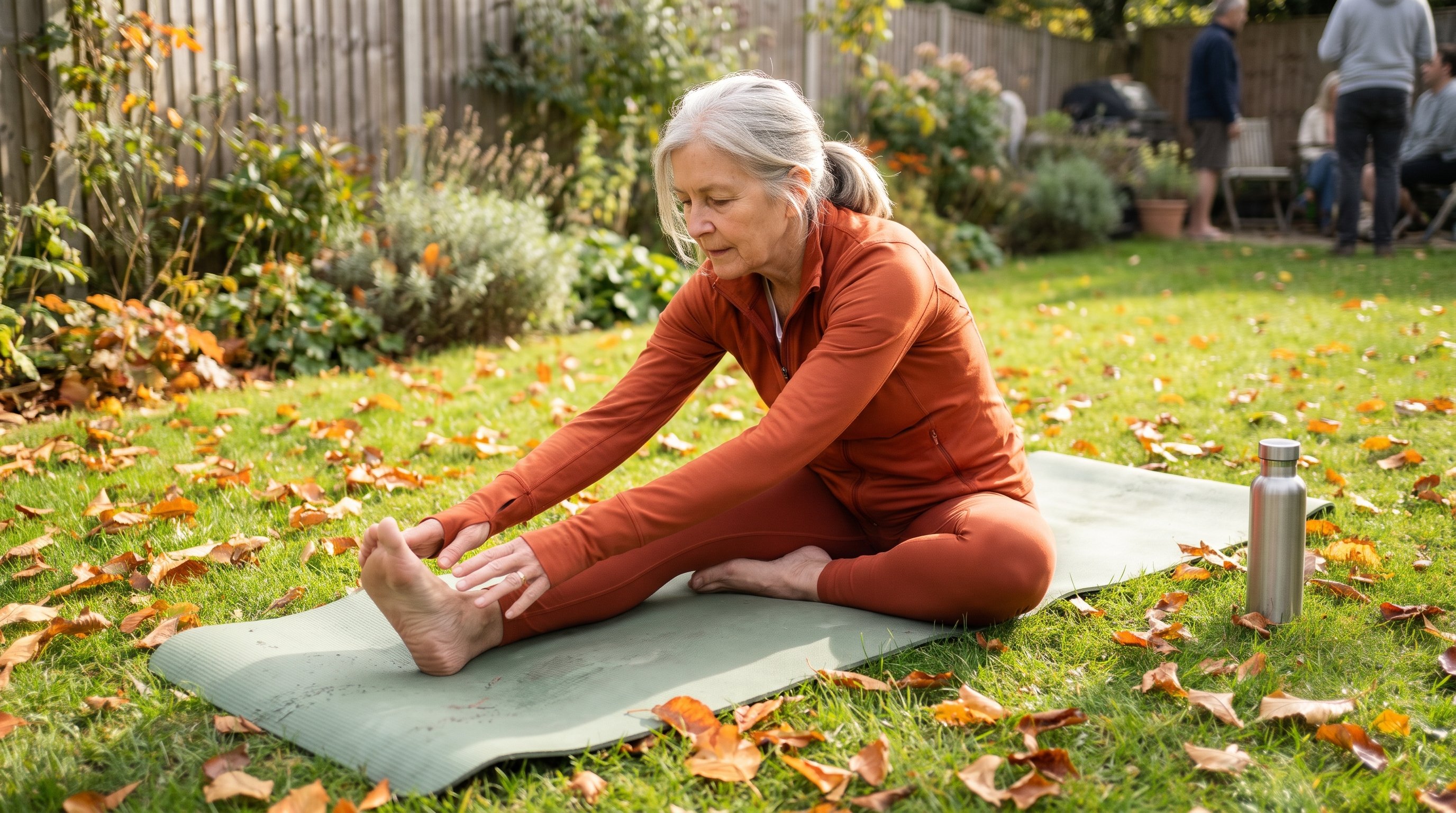
How To Improve Flexibility: A Realistic Guide That Sticks
By:Author:Flexi Yoga Editorial
Updated on:October 28, 2026

- Steps to Start Improving Flexibility Today
- How Often Flexibility Work Actually Needs to Happen
- Working Flexibility Into a Week Already Full
- A Four-Stage Plan for Building Flexibility
- What Changes Over Time and Where People Stop
- Mistakes That Quietly Undo Flexibility Progress
- Building Flexibility Consistency With Flexi Yoga
- Making Flexibility Progress a Normal Part of Life
The fastest way to improve flexibility is short, frequent stretching sessions held for a consistent duration, repeated several times a week rather than one long session now and then.
Muscles and connective tissue adapt to repeated, gentle stretching by gradually tolerating a greater range of motion, which is why spacing sessions out works better than cramming them into one big effort.
This guide covers the steps to get started, how often to stretch, a four-stage plan to follow, what to expect over time and the mistakes that most often get in the way.
Steps to Start Improving Flexibility Today
Flexibility work does not need equipment or a gym. It just needs a plan simple enough to repeat without thinking too hard about it.
Getting Started the Right Way
- Pick three or four areas - shoulders, hips, hamstrings and lower back cover most daily stiffness.
- Warm up first - a few minutes of easy movement like marching on the spot gets blood into the muscles before stretching.
- Hold each stretch gently - ease into mild tension, not pain, and breathe steadily through it.
- Keep sessions short - ten to fifteen minutes is enough to matter if you repeat it often.
- Stretch both sides evenly - one tight hip or shoulder usually has a matching partner that needs the same attention.
- Note how it feels, not how far you go - range of motion improves slowly and unevenly, so comfort is a better marker than distance.
- Repeat on most days - consistency across the week matters more than pushing hard in any single session.
How Often Flexibility Work Actually Needs to Happen
Matching Frequency to the Goal
Flexibility responds to repetition, so a modest amount done often beats an intense session done rarely.
The table below gives a simple frequency guide depending on how much time is available each week.
| Goal | Frequency | Session Length |
|---|---|---|
| General stiffness relief | 4-5 short sessions weekly | 10 minutes |
| Noticeable range gains | 5-6 sessions weekly | 15 minutes |
| Maintenance only | 2-3 sessions weekly | 10 minutes |
| Busy week fallback | Daily micro-sessions | 5 minutes |
Working Flexibility Into a Week Already Full
Most people do not lack the ten minutes stretching needs - they lack a slot that is easy to remember.
Pairing stretches with something already happening, like after brushing teeth or while the kettle boils, removes the decision-making and makes the habit stick on its own.

Guided routines take away the guesswork of what to stretch and for how long, which is where Flexi Yoga fits in, offering short sessions built around common tight spots so there is no planning needed before starting.
That removes the main excuse for skipping - not knowing where to begin - and makes it easier to show up on an ordinary weekday.
A Four-Stage Plan for Building Flexibility
Flexibility gains build in stages rather than overnight, so the plan below moves gradually rather than asking for everything at once.
| Stage | Focus | What Changes |
|---|---|---|
| Stage 1 | Learn gentle holds daily | Short, easy range only |
| Stage 2 | Add longer holds | Slightly deeper comfortable range |
| Stage 3 | Add new areas | Shoulders, spine, ankles |
| Stage 4 | Settle into a rhythm | Repeat the full routine weekly |
What Changes Over Time and Where People Stop
Early on, the main change is comfort - movements that felt tight start to feel more manageable before any visible range difference shows up.
Deeper range changes take longer and happen unevenly across different joints, so it helps to judge progress by ease of movement rather than a fixed target.
The common drop-off point is the stretch between feeling encouraged early on and the slower middle period, when changes feel smaller and easier to skip on a tired evening.
Sticking with a short, repeatable routine through that flatter stretch is usually what separates lasting flexibility from a habit that fades after a few weeks.
Mistakes That Quietly Undo Flexibility Progress
Stretching Cold
Jumping straight into a deep stretch without warming up makes the muscle resist rather than lengthen comfortably - a short warm-up first solves this.
Forcing the Range
Pushing into pain to go further faster usually backfires and makes the next session harder to start - mild tension is the ceiling, not a target to beat.

Skipping Rest Days Entirely
Tendons and connective tissue need a little recovery too, so one or two lighter days a week keeps the routine sustainable.
Chasing One Tight Spot
Flexibility does not improve in isolation in one muscle while ignoring the rest of the body - a balanced routine across major joints works better than fixating on a single area.
Expecting a Straight Line
Some days feel looser than others for reasons that have nothing to do with effort, and treating a stiff day as failure is what makes people quit early.
Building Flexibility Consistency With Flexi Yoga
The biggest factor in improving flexibility is not any single stretch - it is how many sessions actually get completed over weeks and months.
Flexi Yoga is built around that idea, with a tailored exercise plan made up of short, guided sessions so there is no need to design a routine from scratch.
Daily habit trackers keep sessions visible, lifestyle challenges add variety when motivation dips, and the audio and video content fits around a schedule rather than demanding a fixed time slot.

Move Freely Again
Loosen Up Every Day
Making Flexibility Progress a Normal Part of Life
Flexibility improves through repetition, not intensity, so the simplest plan that actually gets repeated beats the ambitious one that gets abandoned after a week.
Pick a short routine, attach it to something already in the day, and let Flexi Yoga handle the structure so the only decision left is showing up.
FAQ
It varies by person and by joint, with comfort usually shifting before range of motion does. Staying consistent through the slower middle weeks matters more than watching for a specific date.
Stretching improves comfort and range, but joints also rely on the muscles around them for support during daily movement. A routine that includes some gentle strength work alongside stretching tends to hold up better over time.
A five-minute session attached to an existing habit, like after waking up, still counts and adds up across a week. Flexi Yoga's shorter guided sessions are built for exactly this kind of squeezed schedule.
Early comfort gains happen faster than deeper range changes, so the middle period can feel flat even though adaptation is still happening. Sticking with the same short routine through that stretch is usually what carries it forward.
Share this post