Full Body Stretching Routine: A Simple Order That Works
By:Author:Flexi Yoga Editorial
Updated on:October 28, 2026
- The Myth That One Stretch Fixes One Tight Spot
- What a Full Body Stretching Routine Actually Does
- Three Things That Change How Far Flexibility Goes
- A Weekly Layout for a Full Body Stretching Routine
- Making a Full Body Routine Fit Around a Busy Week
- What Changes and When People Usually Quit
- Common Mistakes That Stall a Full Body Routine
- Using Flexi Yoga to Stay Consistent With Full Body Stretching
- Keeping a Full Body Routine Going for the Long Run
A full body stretching routine is a short sequence that moves through the neck, shoulders, back, hips, and legs in one sitting, rather than isolating a single tight spot. The real benefit is in the order and the repetition, not in finding one magic stretch.
Joints and muscles work in chains - a tight hip often shows up as a cranky lower back, a stiff neck often starts at the shoulders. Moving through the whole body in sequence respects those connections instead of chasing one symptom.
This article covers the myth that one stretch fixes one problem area, how the mechanism actually works, what changes the result, a sample week, and the mistakes that quietly end most routines before they take hold.
The Myth That One Stretch Fixes One Tight Spot
A common hope is that stretching the hamstrings alone will sort out tight hamstrings for good, or that one neck stretch will undo a day of hunching over a screen. That is not how the body works.
Muscles and joints share load across the whole body, so tightness in one place is often a symptom of restriction somewhere else nearby. There is no spot reduction with flexibility work, in the same way there is no spot reduction with fat loss.
The honest answer is that a routine covering the whole body, done regularly, tends to do more for any single tight area than hammering that one area in isolation ever will.
What a Full Body Stretching Routine Actually Does
Two separate things are happening when you move through a full sequence - one in the muscle tissue, one in the nervous system. Understanding both explains why consistency matters more than any single pose.
The Muscle Side
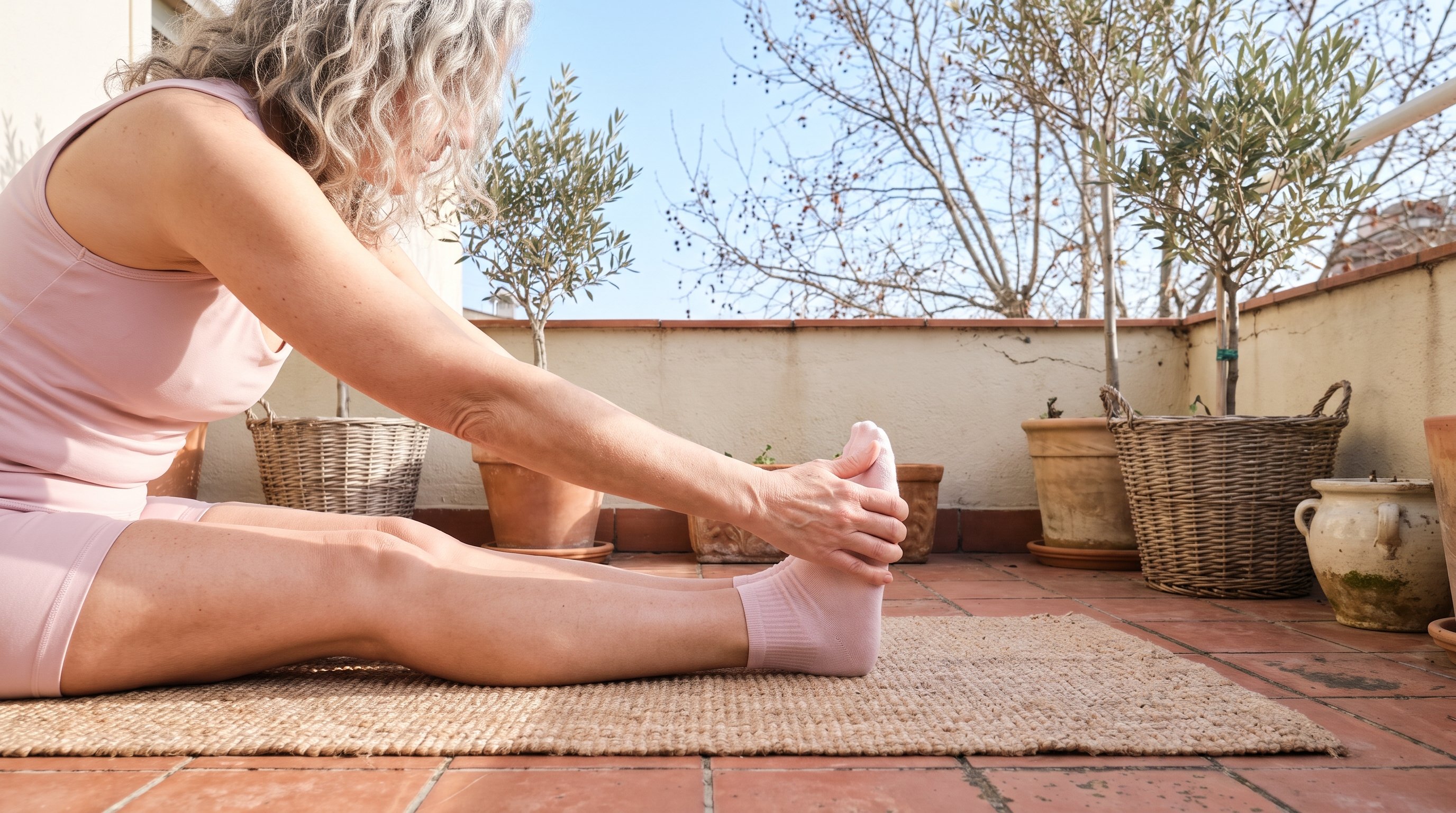
Holding a gentle stretch encourages muscle fibres to lengthen slightly and lets connective tissue around the joint move through a fuller range. Doing this across the neck, back, hips and legs in one session means no single area is left out of that process.
The Nervous System Side
Muscles resist being stretched too far, too fast, as a protective reflex. Slow, repeated movement through a full body routine teaches that reflex to relax a little more each time, which is part of why range of motion improves gradually rather than in one session.
Three Things That Change How Far Flexibility Goes
Not every full body stretching routine produces the same result. These three factors matter more than the exact poses chosen.
What Actually Moves the Needle
- How often you show up - a short routine done most days beats a long one done occasionally, because the nervous system adapts to repeated, gentle signals rather than one big push.
- Whether you cover the whole body - skipping the hips or neck because they feel fine today means those areas never get the steady attention that keeps them fine.
- How gentle each stretch stays - pushing into sharp discomfort tends to trigger the protective reflex rather than ease it, which works against the goal.
A Weekly Layout for a Full Body Stretching Routine
Here is one way to spread a full body routine across a week without it taking over your evenings.
Sample Weekly Schedule
- Monday - neck and shoulders, five to seven minutes, done after waking up.
- Tuesday - lower back and hips, five to seven minutes, done in the evening.
- Wednesday - legs and ankles, five to seven minutes, done after sitting for long stretches.
- Thursday - full body run-through, ten minutes, covering everything briefly.
- Friday - neck and shoulders again, repeating Monday's set.
- Weekend - one longer full body session, or two short ones, whichever fits the day.
Making a Full Body Routine Fit Around a Busy Week
The schedule above only works if it survives contact with an actual week - school runs, late meetings, tired evenings. The honest fix is to shrink the session before you skip it entirely.
A two-minute version of the full body sequence, done daily, holds the habit together far better than a twenty-minute version that keeps getting cancelled.
This is where a guided plan through Flexi Yoga helps, since it breaks the full body sequence into short, guided sessions that fit around a packed schedule rather than demanding a block of free time you do not have.
What Changes and When People Usually Quit
Flexibility work is slow in a way that can feel discouraging if you expect quick, dramatic change. Progress tends to show up first as less morning stiffness and easier movement during ordinary tasks, long before any visible change in range of motion.
The drop-off point is usually somewhere in the second or third week, once the initial motivation fades and the routine starts competing with a normal, busy schedule. Sticking with a shorter, consistent version through that window matters more than pushing harder in week one.
There is no fixed point where the routine is finished - it works more like brushing teeth, a small daily habit that keeps paying off for as long as you keep it up.
Common Mistakes That Stall a Full Body Routine
Skipping the Areas That Feel Fine
It is tempting to only stretch what feels tight and ignore the rest. Covering the whole body, even briefly, keeps the areas that feel fine actually staying that way.
Treating One Long Session As Enough
A single thirty-minute session on a Sunday does less for the body than five short sessions spread across the week. Frequency beats duration here.

Pushing Into Pain
Stretching should feel like gentle tension, not pain. Pushing past that point tends to tighten the muscle through protective reflex rather than loosen it.
Expecting a Straight Line of Progress
Some days range of motion feels better, some days worse, depending on sleep, stress and how much you sat still that day. That variation is normal and not a sign the routine has stopped working.
Using Flexi Yoga to Stay Consistent With Full Body Stretching
Sticking with a full body routine long enough to notice a difference is mostly a question of adherence - sessions completed over weeks and months, not how intense any single session is.
Flexi Yoga offers a tailored flexibility plan built around short, guided sessions, so a full body routine fits into a normal day rather than demanding a gym membership or a long block of free time. Daily trackers cover steps, hydration and wellness routines in one place, challenges give the week some structure, and the curated article library keeps the whole habit informed rather than guesswork.
Move Freely Again
Loosen Up Every Day
Keeping a Full Body Routine Going for the Long Run
A full body stretching routine does not need to be long, complicated or perfectly performed to be worth doing. It needs to happen often, cover the whole body, and stay gentle enough to repeat tomorrow.
Pick one short sequence, do it most days this week, and let the habit build from there - Flexi Yoga can help keep that sequence short, guided and easy to return to on the days motivation runs low.
FAQ
Anywhere from two to ten minutes is enough to cover the whole body gently. Longer sessions are fine occasionally, but shorter daily ones tend to stick better.
Stretching supports easier movement and can ease stiffness, but it is not a cure and will not permanently eliminate stiffness on its own. Movement works best alongside other healthy habits, not as a standalone fix.
A shortened two-minute version covering the whole body briefly is far better than skipping the day entirely. Flexi Yoga structures sessions this way, so a busy day still gets a short, guided routine rather than nothing at all.
Early enthusiasm naturally fades once a routine stops feeling new, which is exactly when most people quit. Keeping the session short and simple through that window matters more than intensity.
Share this post