Best Yoga Stretches: A Simple Guide to Moving Without Pain
By:Author:Flexi Yoga Editorial
Updated on:October 28, 2026
- Do Yoga Stretches Actually Improve Flexibility?
- Short Daily Stretches Versus One Long Weekly Session
- Why Gentle Daily Stretching Beats an Intense Weekly Class
- Who Should Adjust These Stretches and How
- Making Stretching Fit Around Work, Chores and Family Life
- The Myth That Stretching Targets One Stubborn Area
- Building a Stretching Habit With Flexi Yoga
- Keeping the Stretch Habit Going Past the First Month
The best yoga stretches are the ones you actually repeat - slow holds for the hips, hamstrings, spine and shoulders that gently load a joint through its full range.
Muscles and connective tissue adapt when they're asked to lengthen under control, a little more each time, not when they're forced into a deep stretch once and left alone.
This article covers how these stretches work, what a realistic week of them looks like, who needs to adjust them and how to keep the habit going once the novelty wears off.
Do Yoga Stretches Actually Improve Flexibility?
Yes, with a plain mechanism behind it: holding a stretch signals the nervous system to tolerate a longer muscle length, so the same position feels less tight next time.
This isn't about tearing or forcing tissue - it's repeated, gentle exposure that teaches the body a new normal range.
The Honest Arithmetic
If someone holds a hamstring stretch for 30 seconds on each side, that's one minute of work per stretch. Five stretches like that make a five-minute session, and doing that most days of the week adds up to roughly 30 to 35 minutes of total stretching time.
That's a small weekly investment, and it's the repetition across weeks - not the length of any single session - that does the heavy lifting.
Short Daily Stretches Versus One Long Weekly Session
Most people weighing up a stretching habit are really choosing between two shapes of the same effort: a short daily routine or one longer session squeezed in once a week.
Both involve the same total minutes roughly, but they don't behave the same way once life gets busy.
| Factor | Daily Short Sessions | One Long Weekly Session |
|---|---|---|
| Time per session | 5 to 10 minutes | 45 to 60 minutes |
| Skip risk | Low, easy to fit in | High, easy to postpone |
| Soreness afterward | Minimal | Often noticeable |
| Habit forming | Builds quickly | Slower to stick |
| Joint comfort over time | Gradual, steady gains | Uneven progress |
Neither option is wrong, but the daily version asks less of you at any one moment, which tends to matter more than it sounds like it should.
Why Gentle Daily Stretching Beats an Intense Weekly Class
An intense weekly class can feel like real progress in the moment, but it asks a tight body to do a lot of work in one sitting, and that's exactly when people skip it.
Gentle daily stretching asks for less each time, so there's less reason to avoid it, and fewer excuses pile up across a month.
Sessions completed over time matters more than how hard any single session feels - five minutes done most days beats an hour done occasionally, simply because it happens more often.
This is the whole case for the easier route: it isn't softer because it's lazy, it's softer because that's what keeps a person showing up.
Who Should Adjust These Stretches and How
Beginners
Starting out, hold each stretch for less time and skip anything that causes sharp discomfort - a gentle pull is the goal, not a deep burn. Build up gradually by adding a few seconds to each hold every week or two.

People With Busy Schedules
Pick two or three stretches that cover the tightest areas - usually hips and shoulders - and do those consistently rather than trying to fit in a full routine. A short, repeated set beats an ambitious one that gets abandoned by the second week.
Older Adults
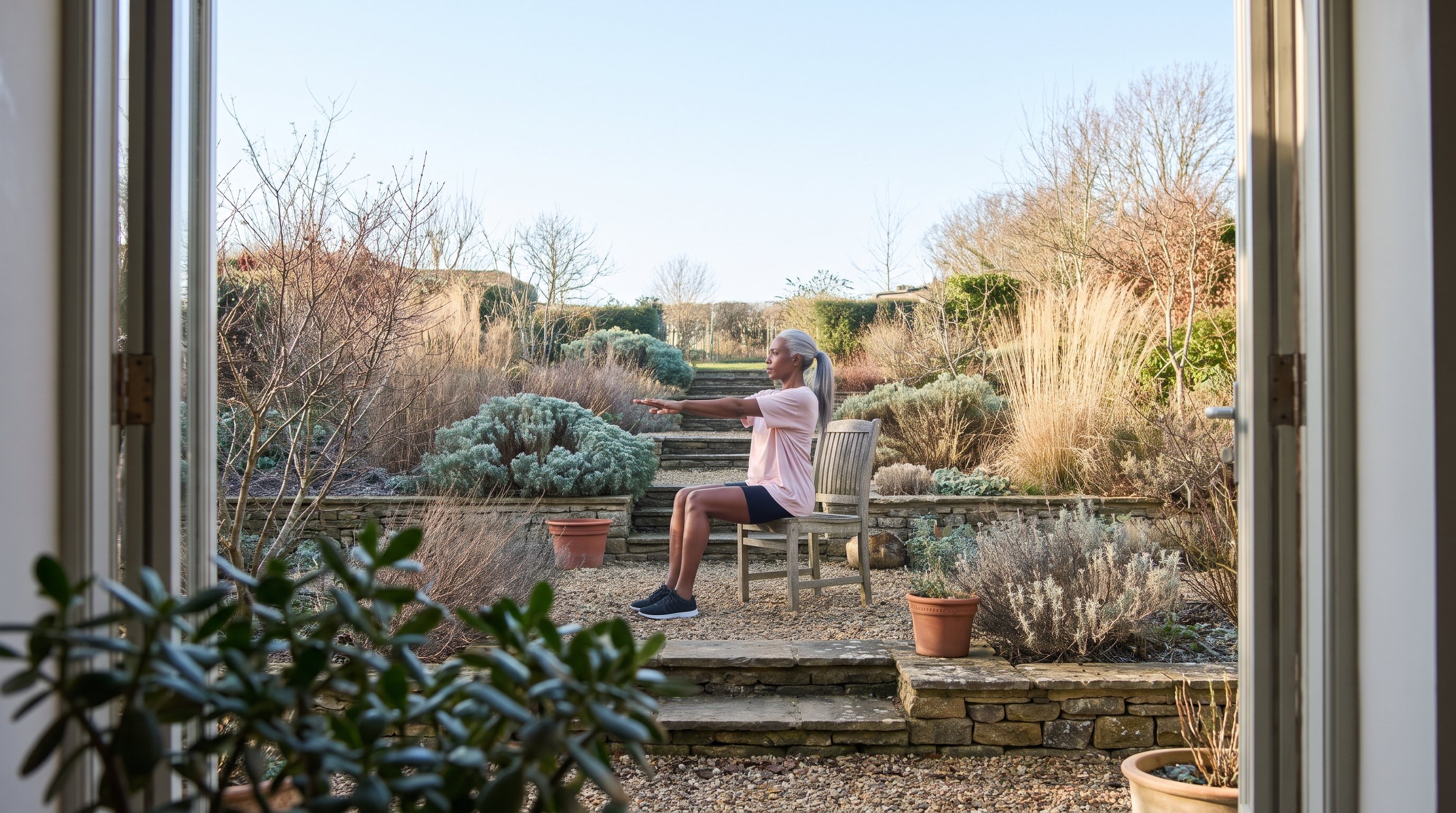
Stretches done seated or supported by a wall reduce balance demands while still working through a joint's range. Moving slowly into and out of each position matters more than how far the stretch goes.
Anyone Returning After a Break
Range of motion that was once comfortable can feel tighter after weeks away from stretching, and that's normal rather than a setback. Starting at a lighter intensity and building back up avoids discouragement in the first week or two.
Making Stretching Fit Around Work, Chores and Family Life
The stretches that work are the ones that slot into a day that already exists, not a separate hour carved out of nowhere.
That might mean stretching while dinner cooks, during a screen break, or right after getting out of bed before the day's demands take over.
A tailored plan that fits around an existing schedule, rather than competing with it, is where guided flexibility sessions come in - they offer short guided sessions designed to slot into gaps in a day instead of asking for a block of free time most people don't have.
Keeping a routine simple and repeatable, in whatever order the day allows, is what makes it last past the first few weeks.
The Myth That Stretching Targets One Stubborn Area
A common hope is that stretching one area - say, the lower back or the hips - will fix stiffness or discomfort there specifically and leave the rest untouched.
The body doesn't isolate like that. Joints and muscle groups work together, so a tight hip can show up as a stiff lower back, and stretching only one spot rarely solves what's really a connected chain of movement.
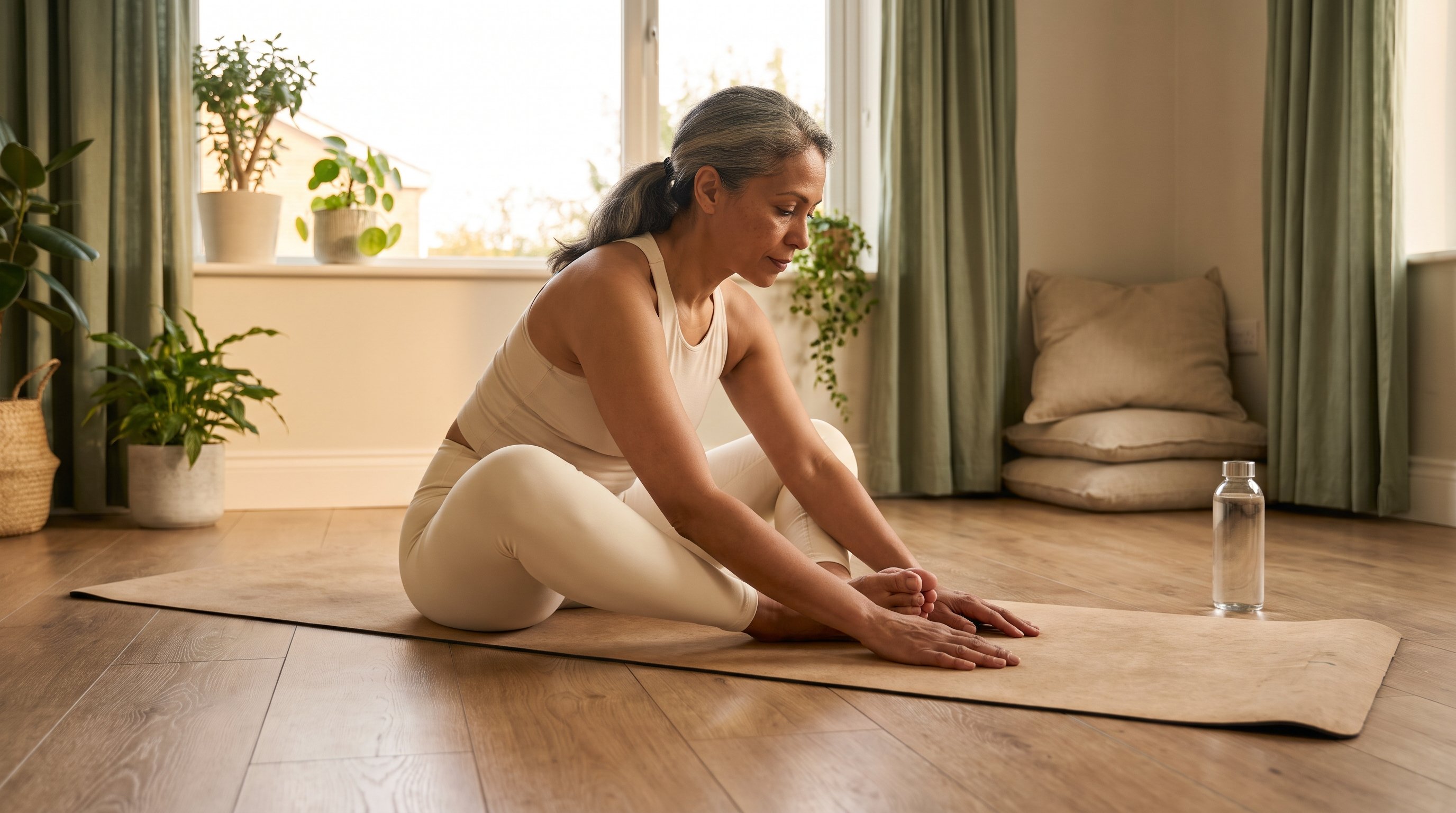
The honest answer is to work the whole chain - hips, hamstrings, spine, shoulders - over time, rather than chasing one area and expecting it to behave independently of everything around it.
Building a Stretching Habit With Flexi Yoga
A habit needs structure to survive busy weeks, and that's the gap most stretching routines fall into once motivation dips.
Flexi Yoga offers a tailored flexibility exercise plan built around short, guided sessions, so the routine adapts to a real schedule instead of demanding a perfect one.
Daily habit trackers for steps, hydration and wellness routines keep the bigger picture visible, while hand-selected challenges turn small, repeatable changes into something worth sticking with.
A specialist-curated article library and a mix of audio and video content round out the plan, giving variety without needing to plan every session from scratch.
Move Freely Again
Loosen Up Every Day
Keeping the Stretch Habit Going Past the First Month
Pick three stretches that cover the areas that feel tightest, do them most days this week, and resist the urge to add ten more before the first three feel automatic.
A guided flexibility program can take the guesswork out of which stretches to choose and when, turning a vague intention into a short daily routine that's easy to repeat.
FAQ
It varies by person and by how tight the area was to begin with, so it's best to judge progress by how a stretch feels compared with a few weeks earlier, not by a fixed date. Consistency across weeks matters more than the pace of any single week.
Not necessarily - a routine that's too intense to repeat regularly does less for flexibility over a month than a gentler one done consistently. The body responds to repeated, tolerable stretching far more reliably than to occasional intense sessions.
A couple of minutes on the tightest areas still counts, and it's far better than skipping stretching entirely while waiting for a free hour that rarely shows up. Short, frequent sessions add up over a month more than people expect.
That's the point where most routines quietly stop, which is normal and not a sign of failure. Flexi Yoga's trackers and challenges are built to catch that dip, giving small, visible wins that make it easier to keep going.
Share this post